
Sort by
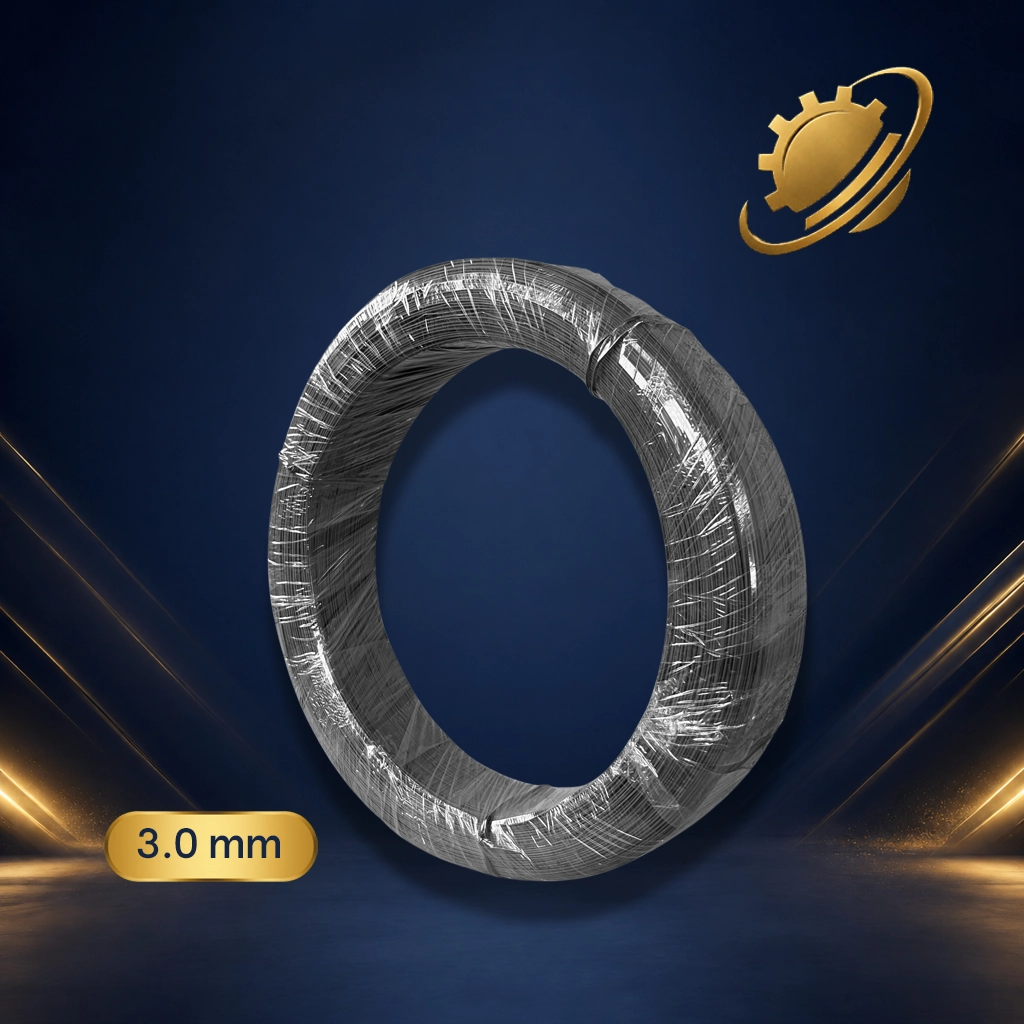
Black wire, also known as annealed wire among wire industry manufacturers, is the fundamental material for weaving all types of mesh and fencing. Our 3.0mm black wire has been produced with a car View details
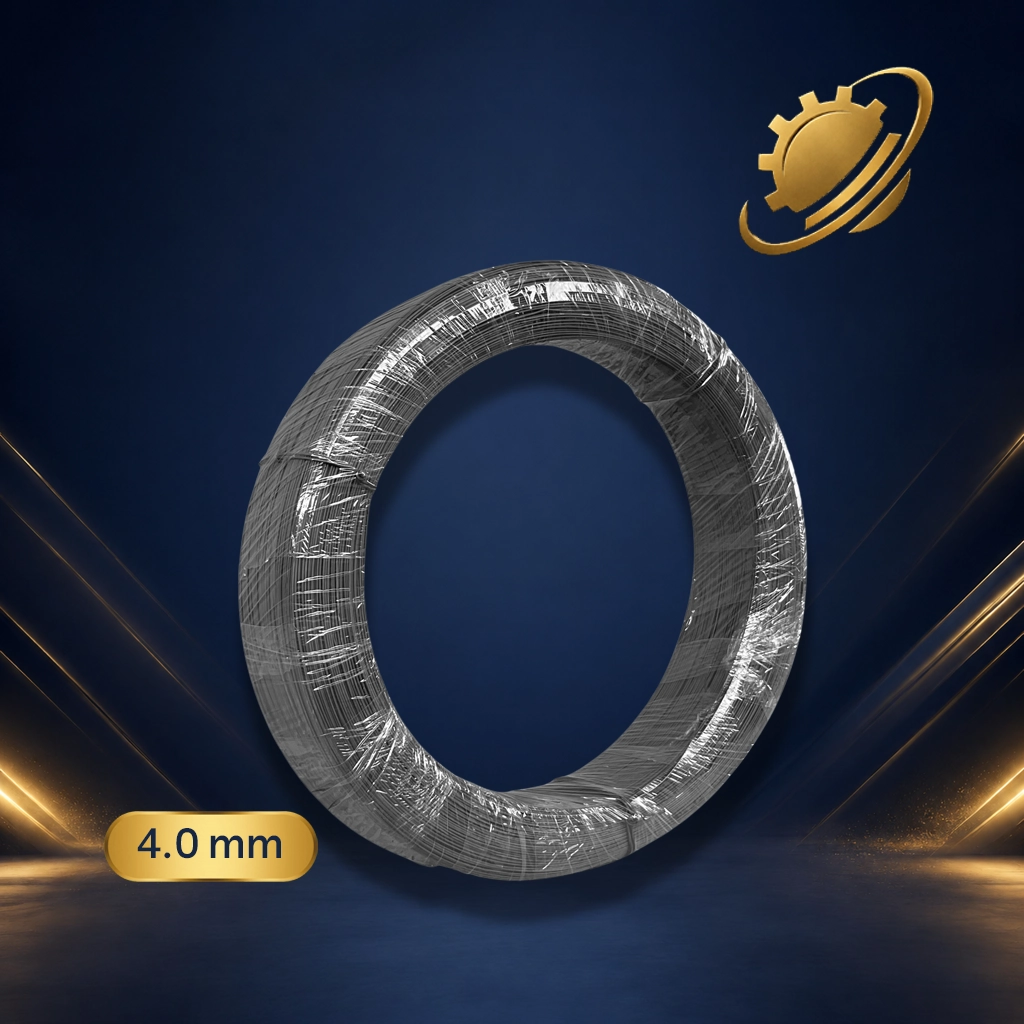
4.0mm black wire, as one of the thick and widely used diameters in the wire industry, plays a highly important role in the production of protective structures and heavy-duty fencing. This product h View details
Fencing and hoarding in construction, workshop, industrial, and even temporary land projects require a material that is both functional and cost-effective. Black edge-strip wire for fencing is precisely where this demand is met. For many general projects, this product creates a good balance between price and performance and can be a suitable choice for buyers looking for an economic option.
Quick Take: Black edge-strip wire for fencing is produced by wire drawing of steel sheet trimmings and performing an annealing process, and is used for economic fencing and general hoarding applications.
Black edge-strip wire for fencing is produced from the side sections of steel sheets. After preparation, these sections enter the drawing line to reach the diameters required for use in fencing and hoarding. Subsequently, to remove the hard and brittle state of the wire, an annealing process is performed.
From a market perspective, this product falls into the category of non-standard (re-rolled) wires. For this reason, it usually has a more reasonable price compared to standard models and receives more attention for projects where budget control is important.
The raw material for this wire is supplied from steel sheet trimmings. This feature results in a lower finished cost, although its uniformity may not be as high as that of standard (virgin) wire.
The annealing process makes the wire softer and more flexible. This is of great importance during fence installation, tying connections, and executing hoarding tasks.
| Feature | Specifications |
|---|---|
| Size (Wire Diameter) | Common for general fencing: approx. 1.5 to 4 mm (depending on mesh/connection type and pressure levels) |
| Coil Weight | Common in the market: approx. 10 to 35 kg (exact weight varies based on the production line and packaging type) |
| Application Type | General and economic fencing and hoarding, temporary/workshop/construction projects, tying connections, and some light metal structures |
| Raw Material Type | Steel sheet trimmings (edges) + drawing to desired diameter + annealing (firing) to increase softness and flexibility |
| Price Range | More economic than standard fencing wire; final price depends on size, coil weight, and daily iron/sheet rates (for exact pricing: daily inquiry) |
Quick Take: The most important features of this product are its economic price, suitable flexibility, usability in general hoarding, and its difference in quality compared to standard fencing wire.
When consumption volume is high, the price per kilogram of wire becomes very important. Black edge-strip wire for fencing, due to its raw material type, is considered a more economic option for many projects.
For fence installation, the wire must be soft enough so that the user can shape it easily and use it in the required location. After annealing, this product has acceptable flexibility for this application.
In general projects, temporary lands, workshops, and spaces where light hoarding is intended, this type of wire can well cover execution needs.
Although this product is functional and economic, it should be noted that in terms of diameter uniformity, raw material quality, and durability, it may have differences compared to standard fencing wire. Therefore, the project type is very important in the final decision.
Quick Take: This product is mostly used for temporary fencing, workshop and general hoarding, and some light metal structures.
One of the most common applications of this wire is the execution of temporary fences in construction projects, workshop lands, and spaces under construction.
For hoarding around workshops, warehouses, vacant lands, or public spaces where the main goal is cost management and execution speed, this product is considered a suitable option.
In some light metal usages where there is a need for a wire with a suitable price and formability, this type of wire can be used.
Quick Take: The main difference between these two products is in raw material, diameter uniformity, service durability, and final price; edge-strip is cheaper, and the standard model has more stable quality.
Edge-strip wire is produced from steel sheet edges, but standard fencing wire is usually made from more uniform and controlled raw materials.
In standard wire, the wire diameter is usually more uniform, and this makes the final execution quality better in some applications. In contrast, edge-strip wire may have more tolerance.
Edge-strip wire is usually cheaper, but in some applications, its service durability may be less than the standard sample. Therefore, the ratio between cost and usage type must be weighed correctly.
Quick Take: To purchase this product, you must simultaneously examine the suitable size, type of hoarding, and actual coil quality so that your economic purchase does not turn into a wrong choice.
The suitable size depends on the type of fence, project dimensions, and the applied pressure. In lighter projects, general market sizes are usually sufficient, but for precise selection, it is better to check the final application.
This wire is more suitable for general, temporary, and workshop hoarding and projects where price is of high importance and there is a need for an economic product.
Before buying, check these items:
- Uniformity of wire diameter
- Annealing quality and softness level
- Actual weight of the coil
- Packaging integrity
- Product suitability with the fence type and project conditions
Quick Take: The price of this product is mostly influenced by size, coil weight, and daily conditions of the iron market.
Wire thickness affects the amount of raw material consumed and the final application. As the diameter changes, the price per kilogram and technical selection also differ.
Coil weight is important for both wholesale purchasing and transportation/warehousing. Professional buyers usually check the standard coil weight in addition to the price per kilogram.
Daily iron rates, steel sheet prices, transportation costs, and supply and demand conditions all have a direct impact on the final price of black edge-strip fencing wire.
Quick Take: Buyers usually ask about the suitability of this product for fencing, its difference from the standard model, and high-demand sizes in the market.
Yes, for many general, temporary, and workshop hoarding applications, this product is a suitable option; especially when economic price is a priority.
The main difference is in raw material, diameter uniformity, final quality, and service durability. The standard model usually has more stable quality, and the edge-strip model is more economic.
Common market sizes for general fencing have the highest consumption, but precise selection must be made based on the mesh type, installation method, and project conditions.
This product is more suitable for temporary fencing, workshop hoarding, general projects, and spaces where cost control and execution speed are important.
Yes, this product gains acceptable flexibility after annealing and becomes suitable for many general fencing applications.
Because its raw material is supplied from steel sheet trimmings, and its finished cost is usually lower than standard fencing wire.
You must check the size, diameter uniformity, annealing quality, coil weight, packaging integrity, and product suitability with the type of hoarding.
Not always. It is very suitable for general and economic projects, but in applications where high durability and more uniformity are required, the standard model will be a better choice.
All material and intellectual property rights reserved by Zarin Navard Espadana Company.
Designed by Nemovweb Website Design and Digital Marketing Agency.