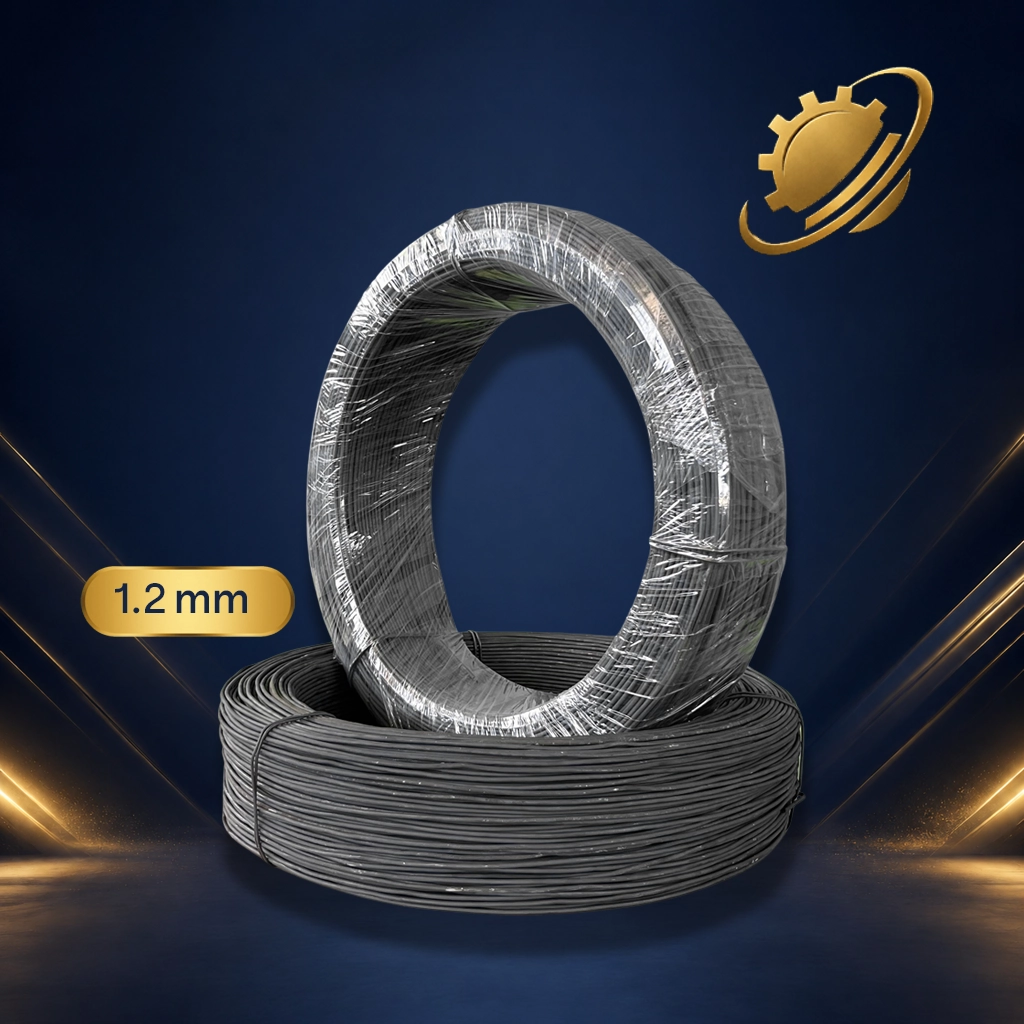
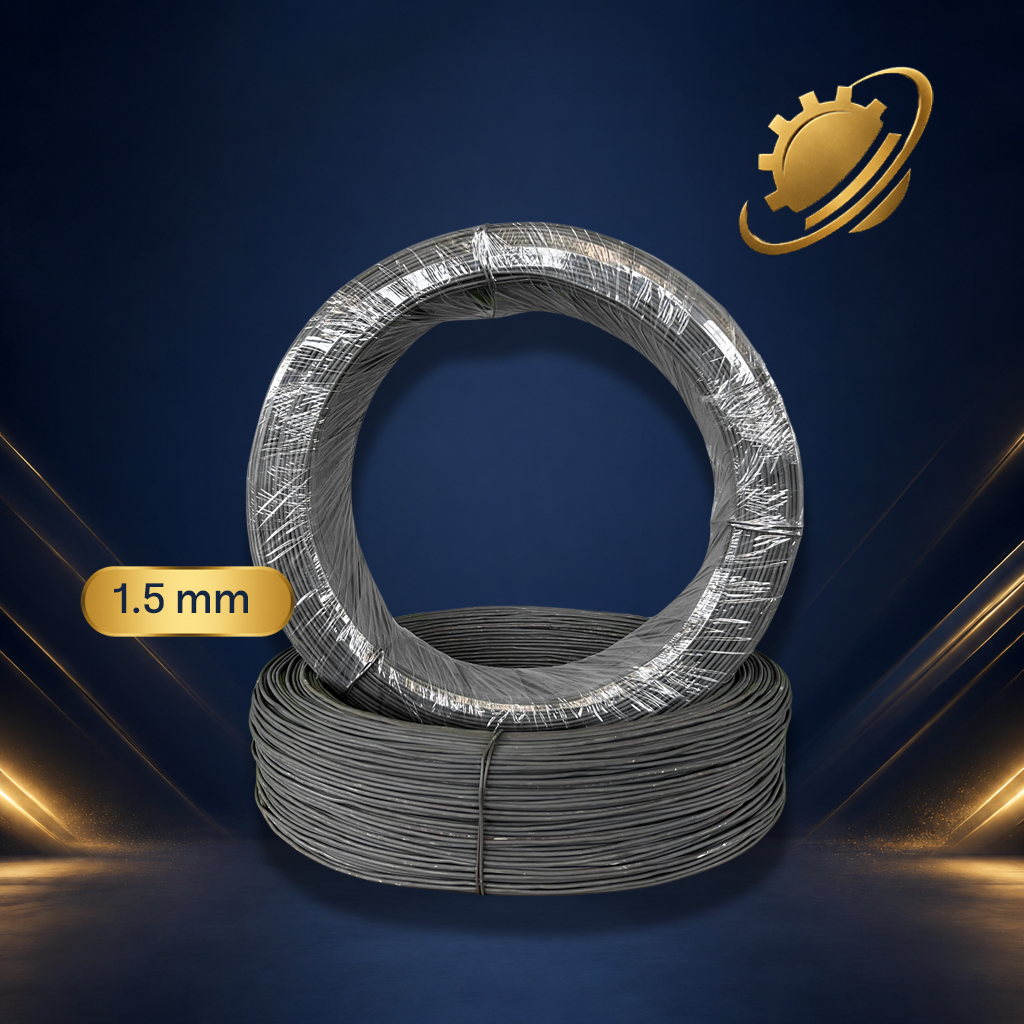
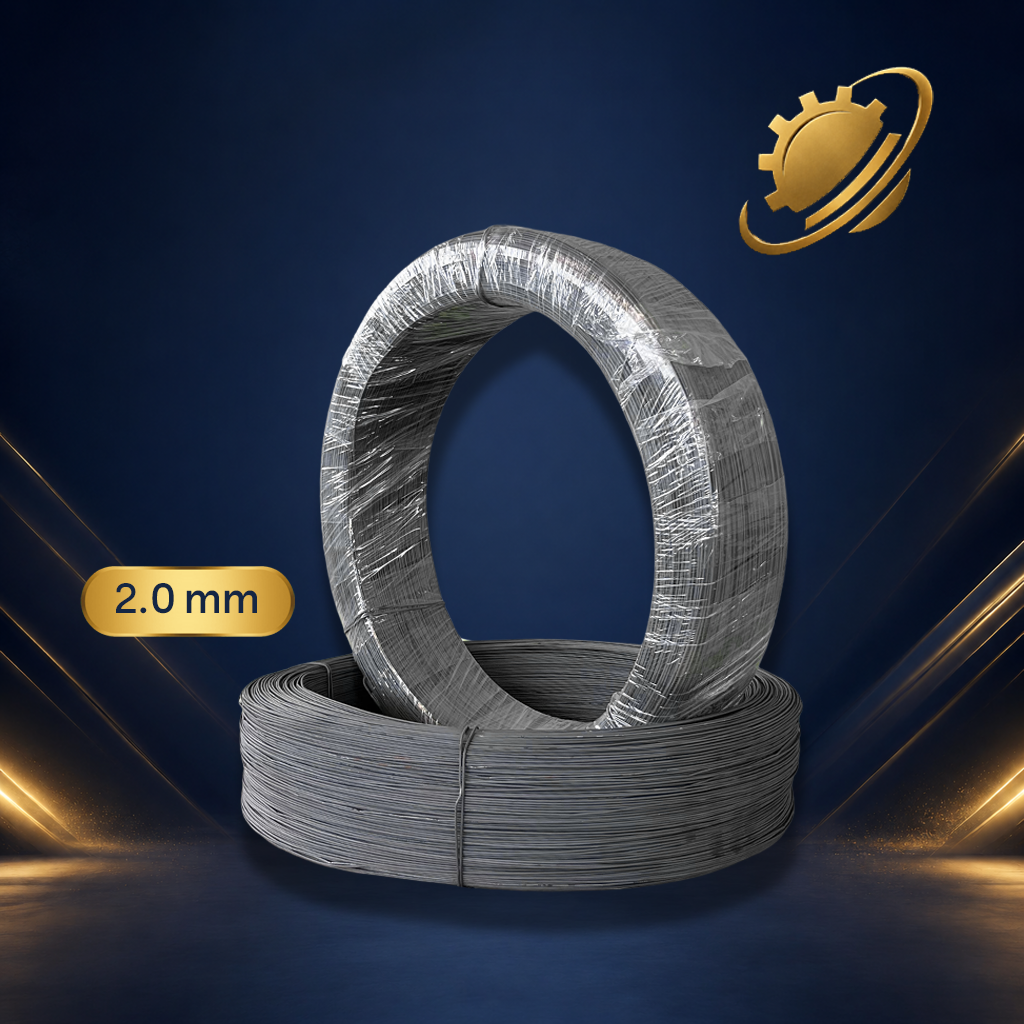
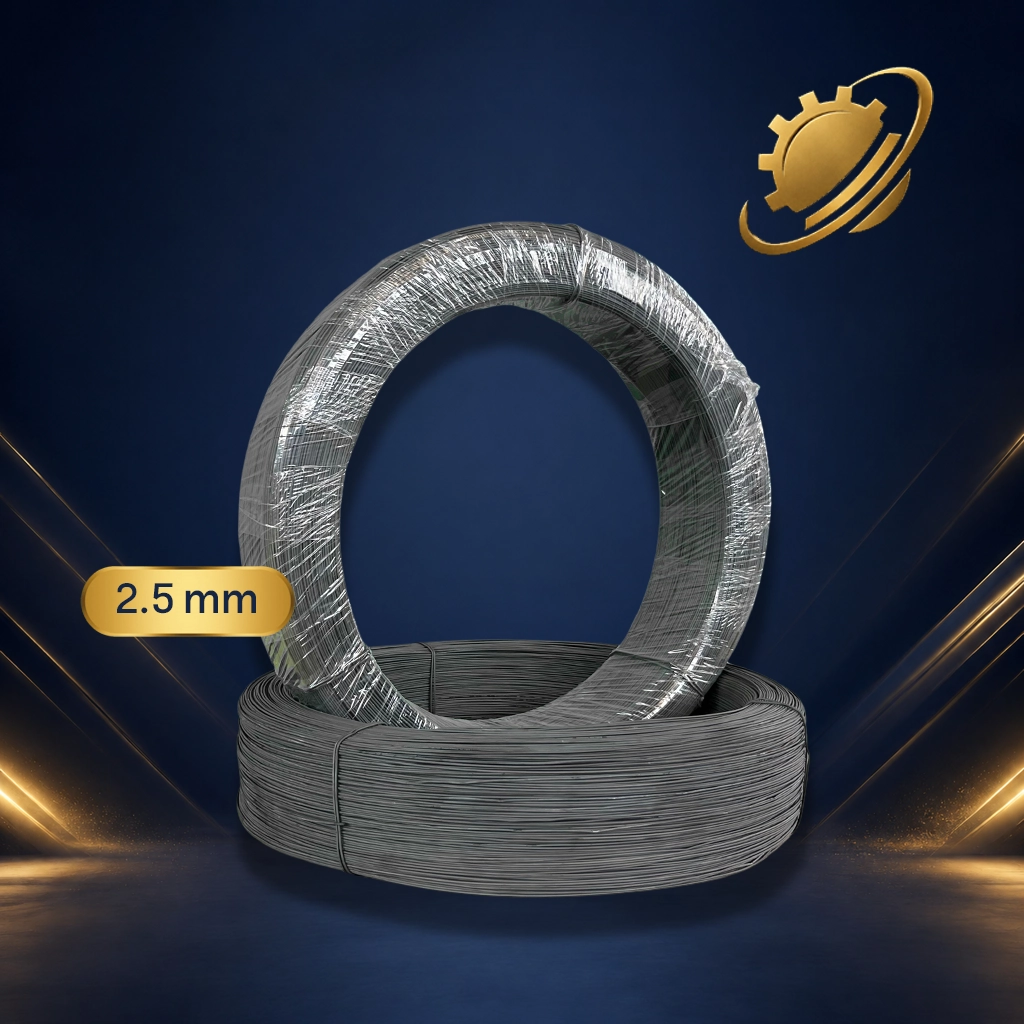
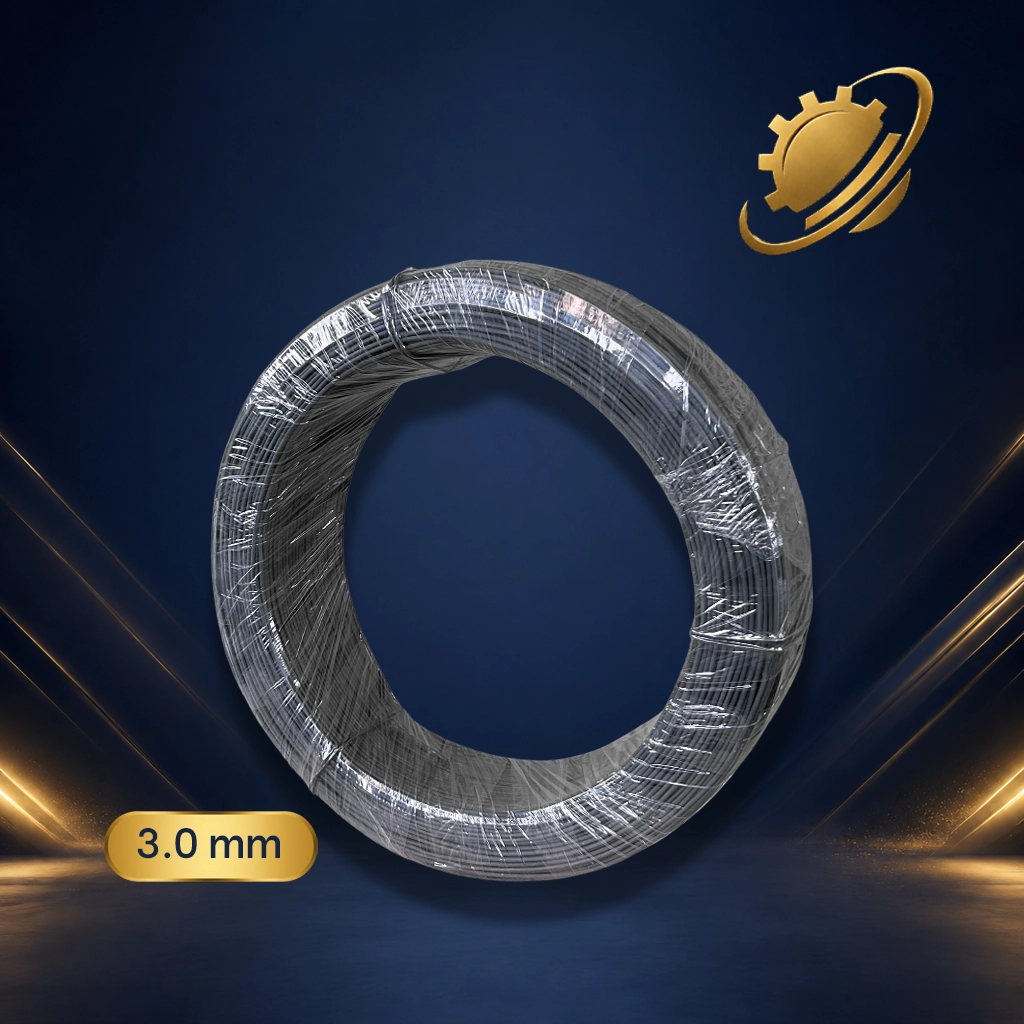
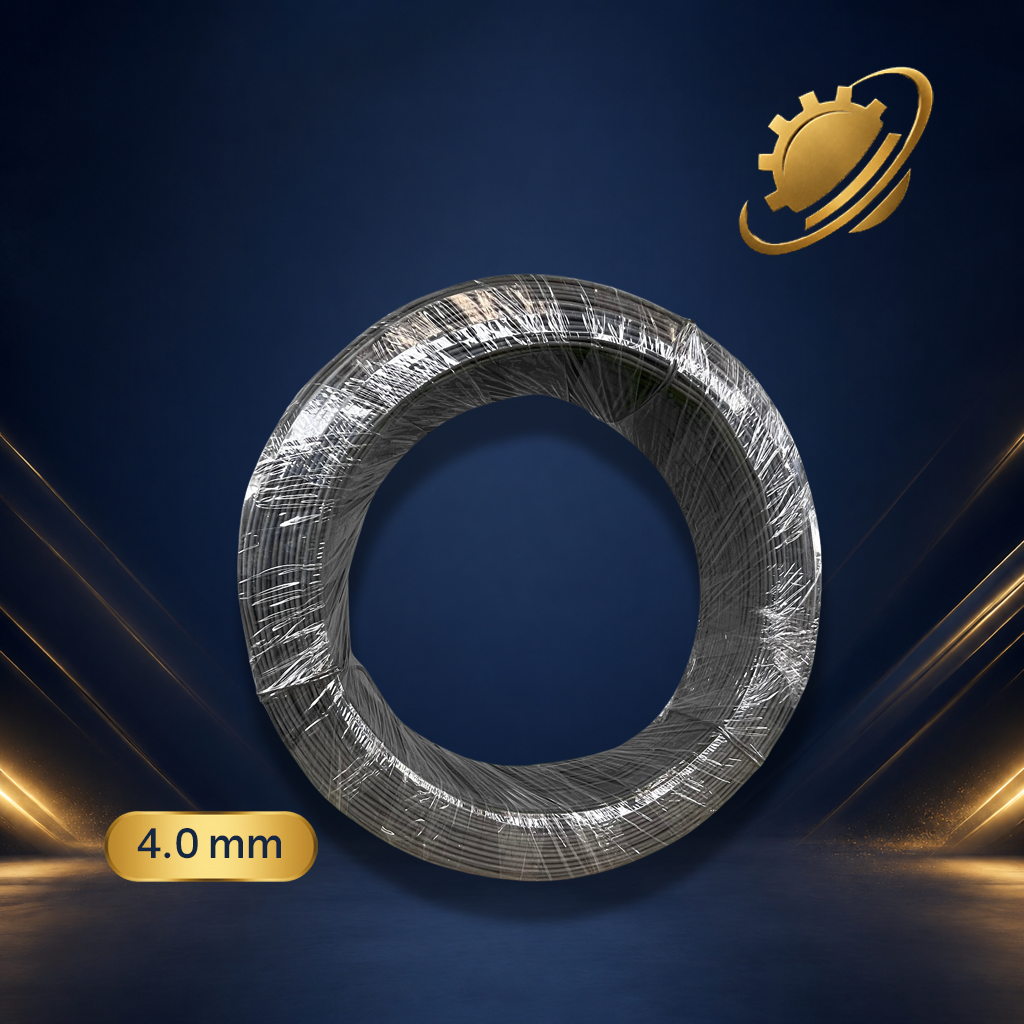
Plate Edge Black Wire
Black plate-edge wire is a familiar and practical product for many professional buyers. This type of wire is mostly chosen when a project requires an affordable product, and at the same time, the consumer wants to use an acceptable wire for general construction or industrial work.
Quick Take: Black plate-edge wire is produced from the drawing and recycling of steel plate edges and, due to its lower price, is known in the market as regular black wire or strip wire.
Technically, this product is produced from the trimmed edges of hot-rolled steel plates. These edges, which are also known as strips in the market, enter the drawing process after preparation to be converted into smaller diameters. Then, to increase softness and flexibility, an annealing process is performed on them.
Commercially, this product falls into the category of non-factory wires. This means its raw material is not like standard and new wire rod, but is obtained from plate edges. This is why its purchase price is more reasonable compared to factory-made wire, making it a more economical choice for many general uses.
Understanding the Production Process
In the production process of this product, steel strips are first properly cut and prepared, then reach the desired diameter through several stages of drawing. After that, the baking operation is performed in a furnace to remove the dry and brittle state of the wire.
Commercial Position in the Market
In the iron market, this product is more attractive to buyers who are looking to control costs. For this reason, wholesalers, building materials shops, and some manufacturing workshops dedicate a significant volume of their purchases to this type of wire.
Features and Technical Specifications of Plate-Edge Wire
Quick Take: The most important advantage of strip wire is its economy; however, the buyer must simultaneously pay attention to softness, size tolerance, and the behavior of the wire during bending.
1- Reasonable and Affordable Price
The main advantage of this product is its lower price compared to factory-made wire. In many projects, this price difference can have a significant impact on the final purchase cost and better manage the project budget.
2- Softness and Flexibility of Strip Wire
The softness of this wire after annealing reaches an appropriate level for general tasks. Of course, its softness is usually not as uniform as factory-made wires, but it is perfectly acceptable for many everyday uses.
3- Thickness and Size Tolerance Along the Coil
One of the important points about this product is the possibility of more fluctuations in thickness and size compared to standard samples. This issue should be examined with greater care in sensitive projects.
4- Tensile Strength and Bending Behavior
The behavior of this wire in bending and drawing depends on the quality of the raw material and the precision of the production process. If production is done correctly, the product will have suitable performance for general tasks; but for sensitive projects, it should be chosen with more caution.
Applications of Regular Black Wire (Plate-Edge)
Quick Take: This type of wire is very suitable for regular rebar tying, formwork, fencing, and economical mesh, and offers the best price-to-performance ratio in general projects.
In general construction projects where execution sensitivity is not very high, this product can be used as regular rebar tying wire. To guide the user, it is better to link internally to the plate-edge rebar tying subcategory in this section.
Formwork wire for bracing temporary structures
For bracing temporary molds and workshop uses, this type of wire is an economical option. In this section, linking to the plate-edge formwork subcategory can be effective for both SEO and sales.
In some temporary or economical fencing projects, using strip wire can reduce execution costs and cover the employer’s need with a lower budget. This section is a suitable place to link to the fencing subcategory.
This wire is also used in the production of some simple and high-consumption meshes. If the goal is to produce a product with a competitive price, this option can be a suitable choice. Internal linking to the mesh subcategory is recommended in this section.
Comparison of Black Plate-Edge Wire with Factory-Made (Standard) Black Wire
Quick Take: If price is your top priority, plate-edge wire is a good choice; but if uniformity, high softness, and reduced waste are more important, factory-made wire is more worth buying.
Difference in Raw Material and Production Method
Plate-edge wire is produced from steel plate strips and edges, while factory-made wire is made from standard wire rod. This difference is the main basis for the quality difference between these two products.
Difference in Softness and Coil Uniformity
Factory-made wire usually has more uniform softness and more stable performance. In contrast, plate-edge wire may have more fluctuations in terms of softness or size along the coil.
Difference in Workshop Waste and Loss
In workshops where execution speed and reducing waste are very important, factory-made wire usually performs better. Because breakage is less, and the user faces less loss when tying knots.
Price Difference and Final Value
In terms of initial price, plate-edge wire is cheaper. But the final value depends on the type of use. If the project is general, this product is a good economical choice; but for sensitive projects, spending more for factory-made wire can be more logical.
Selection and Buying Guide for Black Plate-Edge Wire
Quick Take: Before buying, you must specify the project type, work sensitivity, coil weight, and wire size to avoid buying cheap but unsuitable items.
For which projects is this wire suitable and economical?
This product is suitable for general construction projects, manufacturing workshops, packaging, temporary fencing, and economical mesh production. In these cases, the price-to-performance ratio is very important, and this wire can be a good choice.
When should plate-edge wire NOT be used?
If your project has strict engineering supervision, or requires very high softness, precise uniformity, and minimal waste, it is better to go for factory-made wire.
Paying Attention to Coil Weight and Wire Size When Buying
When buying, do not just pay attention to the price per kilo. The coil weight, actual size, baking quality, and product uniformity must also be checked so you do not face problems during use.
Factors Affecting the Price of Black Plate-Edge Wire (Strip Wire)
Quick Take: The final price of this product depends on the black plate rate, wire size, and the cost of the drawing and annealing process.
Effect of Black Plate and Strip Price on Final Wire Rate
Since the raw material of this product is supplied from plate edges, fluctuations in the price of black plate and strips have a direct impact on the market price.
Effect of Size (Wire Diameter) on Price Per Kilo
As the wire diameter changes, the production cost and raw material consumption also differ. That is why size is one of the important factors in the final rate.
Cost of Annealing (Baking) and Wire Drawing Process
The drawing process, energy consumption, machine depreciation, and baking cost in the furnace all affect the cost of the finished product. The higher the baking quality, the higher the product value.
Frequently Asked Questions About Black Plate-Edge Wire
Quick Take: The main question of buyers about this product is its suitability for rebar tying, the difference from factory-made wire, and the reason for it being cheaper.
Is the quality of plate-edge wire suitable for rebar tying?
For general and ordinary projects, yes; but for sensitive or heavy projects, it is better to use standard factory-made wire.
What is the main difference between strip wire and factory-made wire?
The main difference is in the raw material, the level of uniformity, softness, and the probability of waste during use. Factory-made wire has higher quality, and strip wire is more economical.
Why is the price of black plate-edge wire cheaper?
Because its raw material is supplied from plate edges and strips, and it has a lower finished cost compared to producing wire from standard wire rod.
What are the most consumed sizes of regular wire in the market?
Light and medium sizes have the highest demand for regular rebar tying, formwork, and general uses. For accurate selection, it is better to determine the size based on the usage type and project requirement.