Sort by
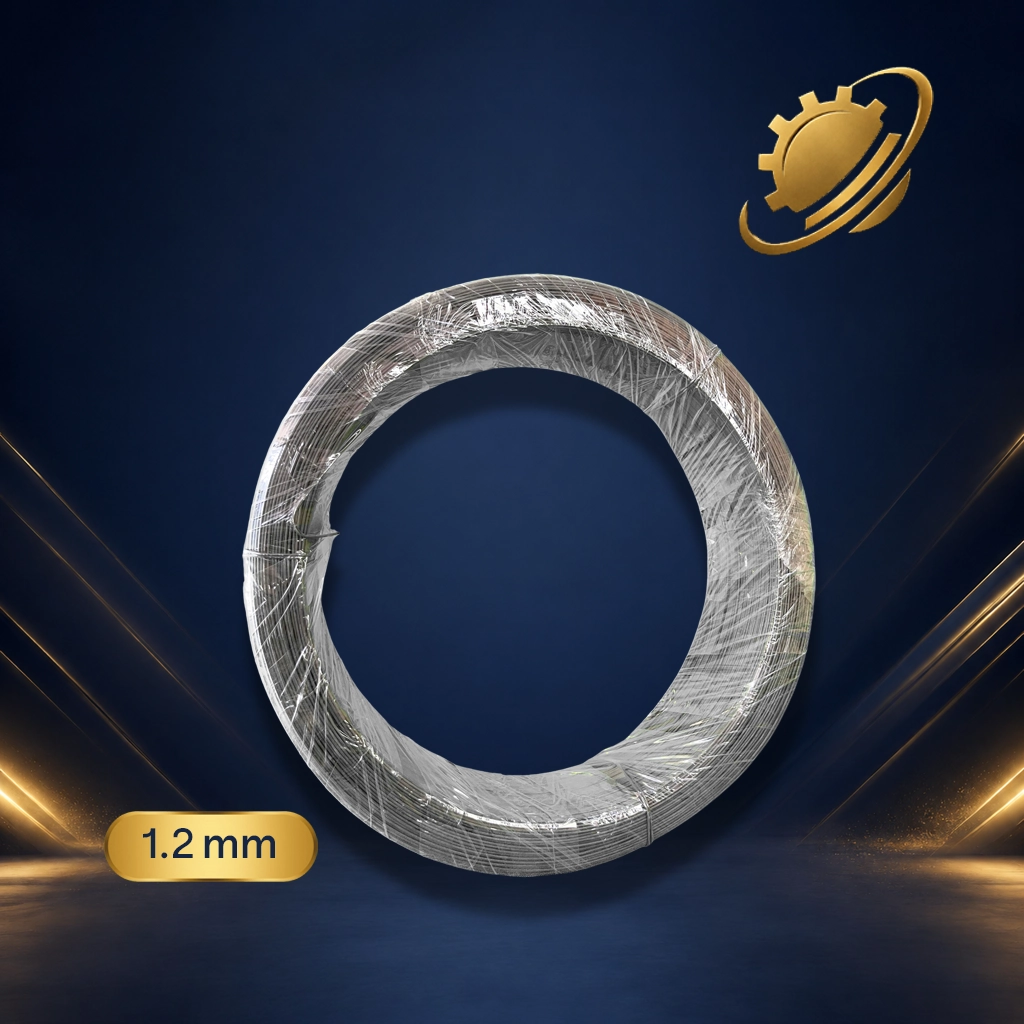
The production of different types of metal mesh, from chicken wire to chain-link and fencing mesh, requires a material that offers both sufficient softness for weaving and economic justification. Black edge-strip wire for mesh is exactly the product that combines these two features. If you are a manufacturer or use a large volume of mesh in your construction projects, a precise understanding of this product can directly affect your profit margin.
Quick Take: Black edge-strip wire for mesh is produced by drawing the edges of steel sheets and applying an annealing process, making it an economic option for the wire mesh manufacturing industry.
This wire is obtained from the side edges of steel sheets that remain as excess material during the production of the main sheet. These edges are drawn through several stages until they reach the desired diameter, and are finally annealed in special furnaces to achieve the softness required for mesh weaving. Due to the use of recycled raw material or production edge strips, this product offers a competitive price, which has made it the first choice for many manufacturing workshops.
Quick Take: The key features of this product include economic pricing, desirable flexibility for weaving machines, and practical performance in general production.
In the mesh industry, the final cost of the end product depends heavily on the price of wire. Edge-strip wire, due to its cost-efficient sourcing, allows you to offer your produced mesh to the market at a more competitive price.
Although this wire is produced from sheet edges, the annealing process performed on it makes the wire form well in mesh weaving machines and prevents frequent breakage.
For meshes that are not intended to withstand very heavy mechanical loads or be used in special environments, this wire provides completely acceptable performance and covers general standards.
It should be said honestly that this wire differs from standard mesh wire produced from wire rod. The main difference lies in carbon content and uniformity, which we will examine more precisely in the following sections.
Quick Take: This product is mainly used in the production of various metal meshes, general mesh weaving, and light construction and workshop projects.
The main use of this wire is in weaving metal meshes that are applied across various construction and agricultural industries.
Many mesh manufacturers who supply their products to the market for general and non-industrial applications use this wire so that the final product remains cost-effective for the end customer.
In addition to production, this wire is also used in construction workshops themselves for tying, fixing, and light metal tasks that require high flexibility.
Quick Take: The main difference between these two lies in surface quality, uniform formability, and final price, and the right choice should be made based on project needs.
Standard mesh wires, usually produced from wire rod, generally have a more uniform surface and much more precise diameter. Edge-strip wire may show slight thickness variations along the coil.
If your mesh weaving machine is very sensitive or old, standard wire usually performs more smoothly with it. Edge-strip wire is fully workable for modern machines with correct settings.
Price is always the strong advantage of edge-strip wire. If your project does not have high technical sensitivity, buying edge-strip wire is more cost-effective.
Quick Take: For a successful purchase, set your priorities based on the type of mesh you produce and the sensitivity of the work so you can make the best choice.
The wire size depends entirely on the type of mesh, including mesh opening and final thickness. Manufacturers usually order medium sizes more often for general-purpose mesh.
This wire is excellent for construction meshes, light fencing meshes, and chicken wire intended for non-industrial applications.
- Wire softness (always request a sample)
- Coil uniformity
- Coil weight (for production calculations)
- Oil and grease level on the wire surface (if the mesh will be painted)
Quick Take: The price of this product changes depending on size, coil weight, and annealing quality.
Thicker sizes have more weight, and naturally the price per coil is higher. Size selection should be based on the
All material and intellectual property rights reserved by Zarin Navard Espadana Company.
Designed by Nemovweb Website Design and Digital Marketing Agency.