Sort by
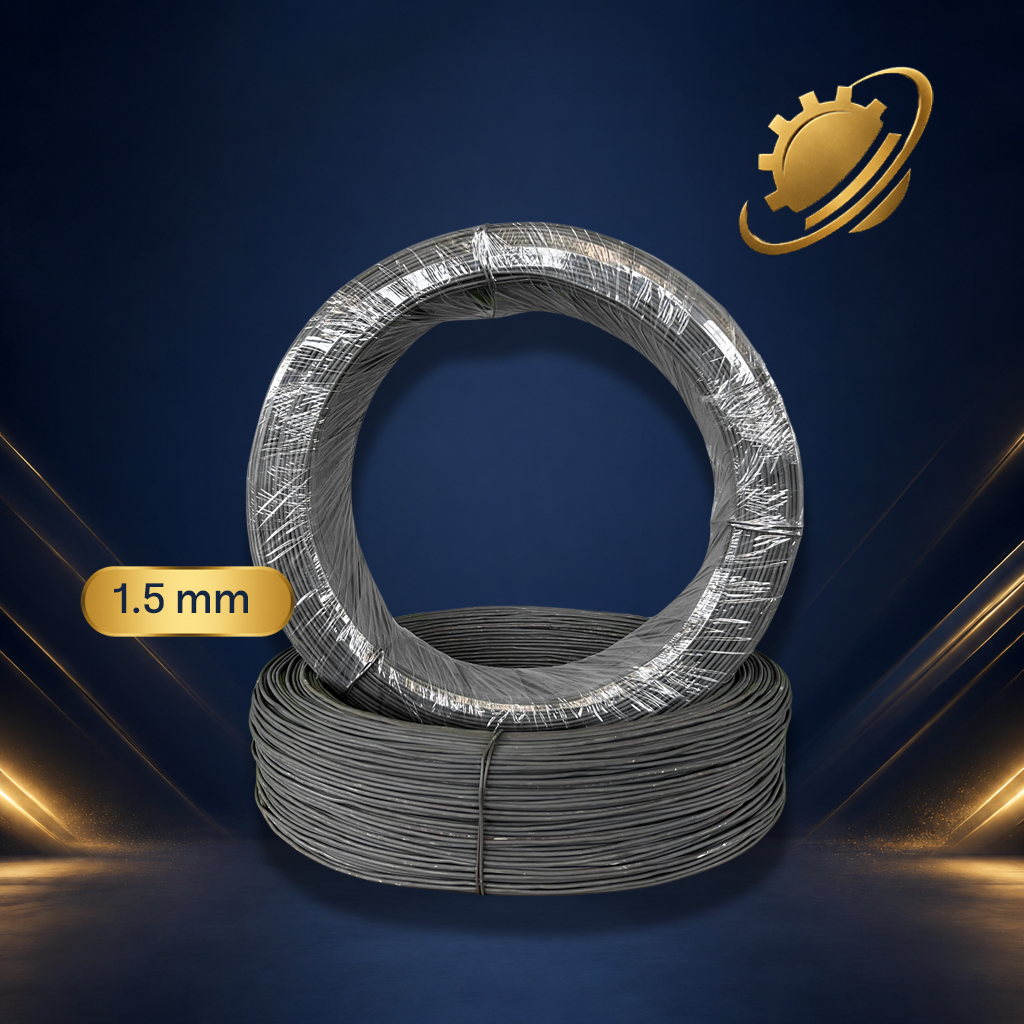
Concrete formwork is the beating heart of structural execution. The wire used to tie and secure formwork must be able to withstand the lateral pressure of concrete while also being soft enough for workers to tie it easily. Standard black formwork wire is a product specifically manufactured to meet these technical requirements. If you are a contractor or active in construction projects, understanding the difference between this wire and other options on the market will greatly help you maintain a safe and well-organized job site.
Quick Take: Standard black formwork wire is drawn from industrial steel rod (original/raw material) and produced through a precise annealing process to provide contractors with the highest level of quality and reliability.
Unlike wires produced from scrap or sheet-edge material, this product uses low-grade industrial rod as its raw material. The production process includes cold drawing to achieve the exact diameter, followed by annealing in furnaces to reach the desired softness level. The result of this process is a wire that is neither too brittle nor so soft that it tears under tension. This standardized quality is the main characteristic of the product and gives you peace of mind during operation.
Quick Take: High tensile strength, uniform softness throughout the entire coil, and reliable stability under different conditions are the key features of original formwork wire.
Concrete formworks carry substantial weight, and the pressure of fresh concrete adds even more load. Standard wire creates a balance between tensile strength and softness, allowing the forms to stay firmly in place without slipping or deformation.
One of the biggest problems on construction sites is dealing with wire coils in which one section is soft and another is stiff. With standard wire, due to quality control during manufacturing, you will not face this issue, and the quality remains consistent meter by meter throughout the coil.
Rebar workers and formwork installers need a wire that can take shape with a simple twist. Standard annealed formwork wire, thanks to proper heat treatment, places minimal strain on the operator’s hands and increases work speed.
In projects under strict engineering supervision, the use of low-quality materials may cause work stoppage. This wire is fully compatible with construction standards.
Quick Take: This wire is widely used in securing concrete formworks, fixing temporary connections, and civil projects where safety and speed are top priorities.
For tying metal or wooden forms in columns, walls, and beams, this wire is considered the primary fastening tool, and due to the strength of its original raw material, it reduces the risk of formwork opening to nearly zero.
In many cases, side components, pipes, or formwork fittings need to be temporarily fixed in place. Standard black wire, due to its high strength, is one of the best options for this purpose.
High-rise buildings, bridges, and heavy concrete structures that require high execution accuracy all use this wire as a primary option.
Quick Take: The main difference lies in the raw material source (steel rod versus sheet scrap), which leads to differences in uniformity, durability, and final price.
Standard (original) wire is produced from steel rod with a defined chemical composition and better uniformity. Sheet-edge wire is sourced from steel sheet scrap, which may have varying metallurgical properties.
In standard wire, fluctuations in diameter and softness are very minor. In contrast, sheet-edge wire may contain stiff and soft spots or diameter changes within the same coil, which makes the work more difficult for laborers.
Standard wire is designed for demanding conditions, so its durability in heavy-duty workshop environments is significantly higher than economic sheet-edge wire.
Quick Take: When purchasing, consider the right size for your project, the supplier’s credibility, and whether the wire is truly original/raw-material based so you can achieve the best performance.
Sizes from 2.5 to 4 mm are the most commonly used. Size 2.5 mm is generally used for general work, while larger sizes are used to secure heavier formworks.
For all concrete projects where quality, safety, and execution speed are priorities, standard wire is the best recommendation.
- Ask the seller to invoice the wire as "original" wire (produced from steel rod).
- Pay attention to the visual uniformity of the coil.
- Match the coil weight with your purchase order.
Quick Take: The price of this product is influenced by the quality of raw material (steel rod), the precision of the manufacturing process, and fluctuations in the steel market.
The thickness of the wire directly affects its weight and the amount of raw material consumed, and this is reflected in the final price.
Producing original wire costs more than producing sheet-edge wire, but that added cost is in fact the price you pay for peace of mind and for preventing execution failures.
Since this product is sold by weight, daily fluctuations in steel prices in the commodity market directly affect its price.
Quick Take: Buyers are mostly concerned about the wire’s ability to handle heavy formwork, its distinction from the economic type, and choosing the right size.
Yes, standard black wire, thanks to the tensile strength of original steel rod, is fully ideal for even the heaviest construction formworks.
The main difference is in quality uniformity, higher strength, and more stable behavior during tying, which makes the standard model a superior option for professional work.
Sizes 2.5 mm and 3 mm are the most widely used, but depending on column height and concrete pressure, 4 mm wire is also sometimes used.
All material and intellectual property rights reserved by Zarin Navard Espadana Company.
Designed by Nemovweb Website Design and Digital Marketing Agency.