Sort by
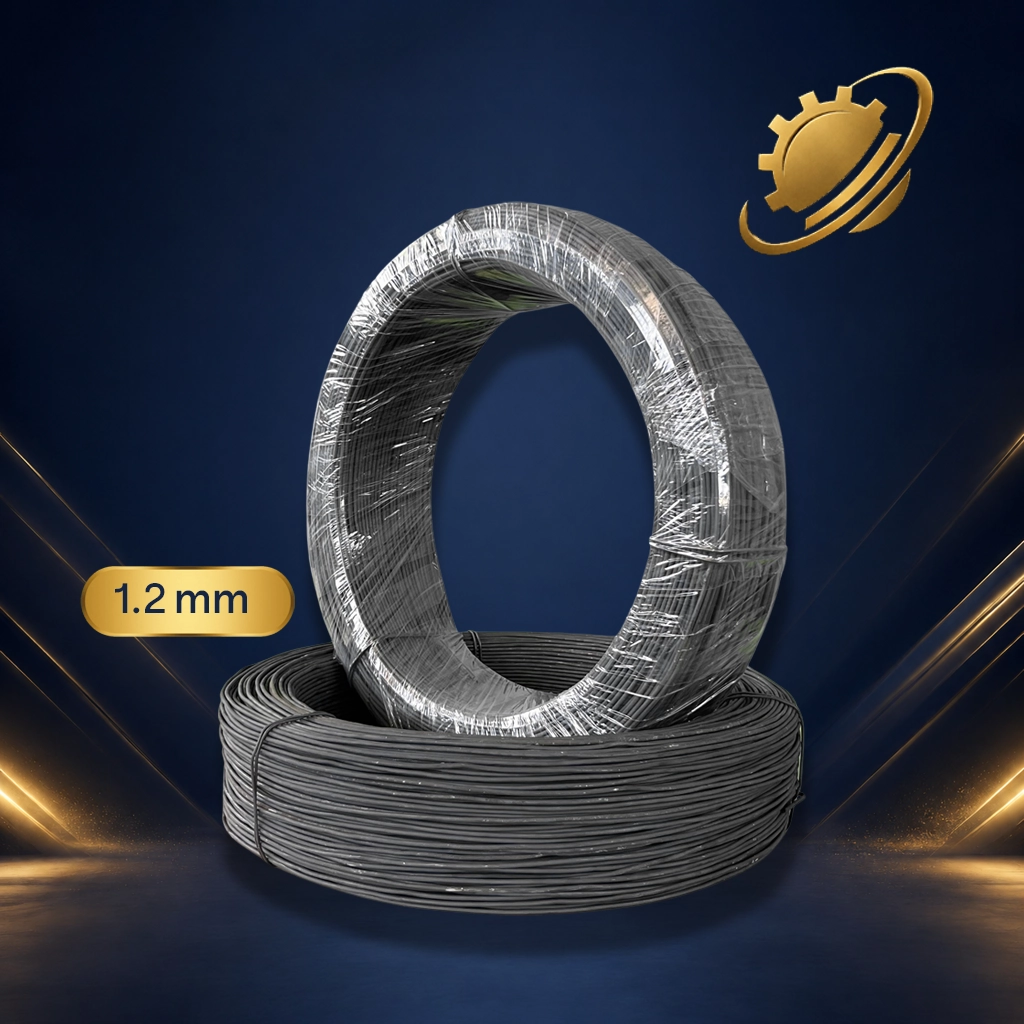
The world of wire mesh production is a world of precision. Every millimeter of difference in wire thickness can transform your machine’s output. Standard black annealed wire for mesh, drawn from industrial steel rods and annealed in specialized furnaces, is the product that allows your mesh weaving machine to operate without stoppage and with the best quality. If you are looking to improve the quality of your products, this article is written for you.
Quick Take: Standard black annealed mesh wire is a product produced through the precise drawing of steel rods and professional annealing to ensure softness and uniform diameter.
Unlike cheap or scrap wires, this product is made from first-class raw materials (steel rods). The main goal of producing this type of wire is to meet the needs of mesh weaving workshops that must produce products with precise meshes and a tidy appearance. The annealing process in this product is done with precision so that the wire is neither brittle nor too soft to stretch in the machine.
Quick Take: The key features of this wire include diameter uniformity, high flexibility, and stable surface quality, which are vital for mesh weaving machines.
Mesh weaving machines are very sensitive to sudden changes in diameter. In standard wire, the wire diameter is uniform throughout the coil, which causes your final mesh to be woven without extra knots or unwanted openings.
The annealing process in this wire is adjusted so that the wire reacts best to twisting around the mesh weaving machine’s mold. This flexibility ensures that the wire does not crack during weaving, ultimately making your mesh more durable.
When you buy from a reputable supplier, every coil of wire that reaches the workshop is similar to the previous one. This consistency in quality means you will no longer worry about constant adjustments to the mesh weaving machine.
If you produce meshes with fine holes or for sensitive industrial uses, the only logical option is standard black wire that follows construction standards.
Quick Take: This wire is used in the production of metal meshes, industrial and construction uses, and wherever precision in weaving is important.
From simple chain-link fences to poultry netting and industrial meshes, this wire is the foundation of production and performs flawlessly in automatic and semi-automatic machines.
In civil projects that require meshes with specific resistance, standard wire ensures that the final product has the desired mechanical properties.
For mesh manufacturers looking to brand and offer quality products in the market, using standard wire is a necessity to produce uniform and clean meshes.
Quick Take: The difference is in the output; standard wire eliminates waste and increases speed, while sheet-edge wire may reduce production speed due to quality fluctuations.
Sheet-edge wire may have oxide scales or impurities. However, standard wire has a clean and uniform surface, which is necessary for producing meshes with high visual quality.
In sheet-edge wires, we sometimes encounter sudden changes in the wire’s softness, which can stop the machine. Standard wire is completely predictable along the coil.
Your work output with standard wire is a mesh where all holes are identical. This is what your end customer or employer recognizes as a professional product.
Quick Take: When buying, pay attention to the wire size, the desired type of mesh, and the supplier’s quality stability to prevent waste of capital.
The wire size depends on the type of mesh (poultry, chain-link, gabion). Usually, sizes 2 to 3 mm are the most widely used. Before buying, discuss your type of weaving and machine with the sales consultant.
For all manufacturers who want quality and customer-friendly mesh, both for the domestic market and for export, this wire is the best recommendation.
- Ensuring the wire is factory-made (produced from steel rods).
Testing uniformity by taking a few meters as a sample.
Coil weights and ensuring standard weight tolerance.
Quick Take: The price of this product depends on the steel rod rate, annealing costs, and coil weight, and market iron fluctuations directly affect it.
Wire thickness directly affects the amount of raw material consumption and naturally changes the final price.
The quality of the base steel rod determines production costs. Cheap wires are usually made from low-quality scrap, which ultimately damages your machines.
Considering the weight-based sale of this product, daily fluctuations in the iron market affect the final price. For high-tonnage purchases, it is necessary to inquire about the daily price.
Quick Take: The main concern of mesh manufacturers is the difference in quality compared to cheap models and how to identify standard wire.
Yes, this product is produced specifically for this purpose to facilitate weaving work with softness and uniform diameter.
The main difference is in quality uniformity, clean surface, and stable behavior during weaving, which ultimately leads to higher quality mesh production and less waste.
Sizes 2, 2.2, 2.5, and 3 mm are the most used in mesh weaving and fencing industries.
Non-standard wires usually do not have uniformity (they are hard in one part and loose in another), which causes irregular stretching and getting stuck in the weaving machine.
Yes, due to its high softness and uniformity, this wire is ideal for weaving fine meshes like poultry netting.
Unroll a sample from the coil; if the wire diameter changed over a few meters or it was flaky, it is not standard. Standard wire must have a smooth and uniform surface.
Yes, for major customers and production workshops, it is possible to send a sample for weaving tests.
The price difference varies depending on market fluctuations, but the higher quality of standard wire covers this price difference in practice by reducing waste and increasing production speed.
All material and intellectual property rights reserved by Zarin Navard Espadana Company.
Designed by Nemovweb Website Design and Digital Marketing Agency.