
Sort by
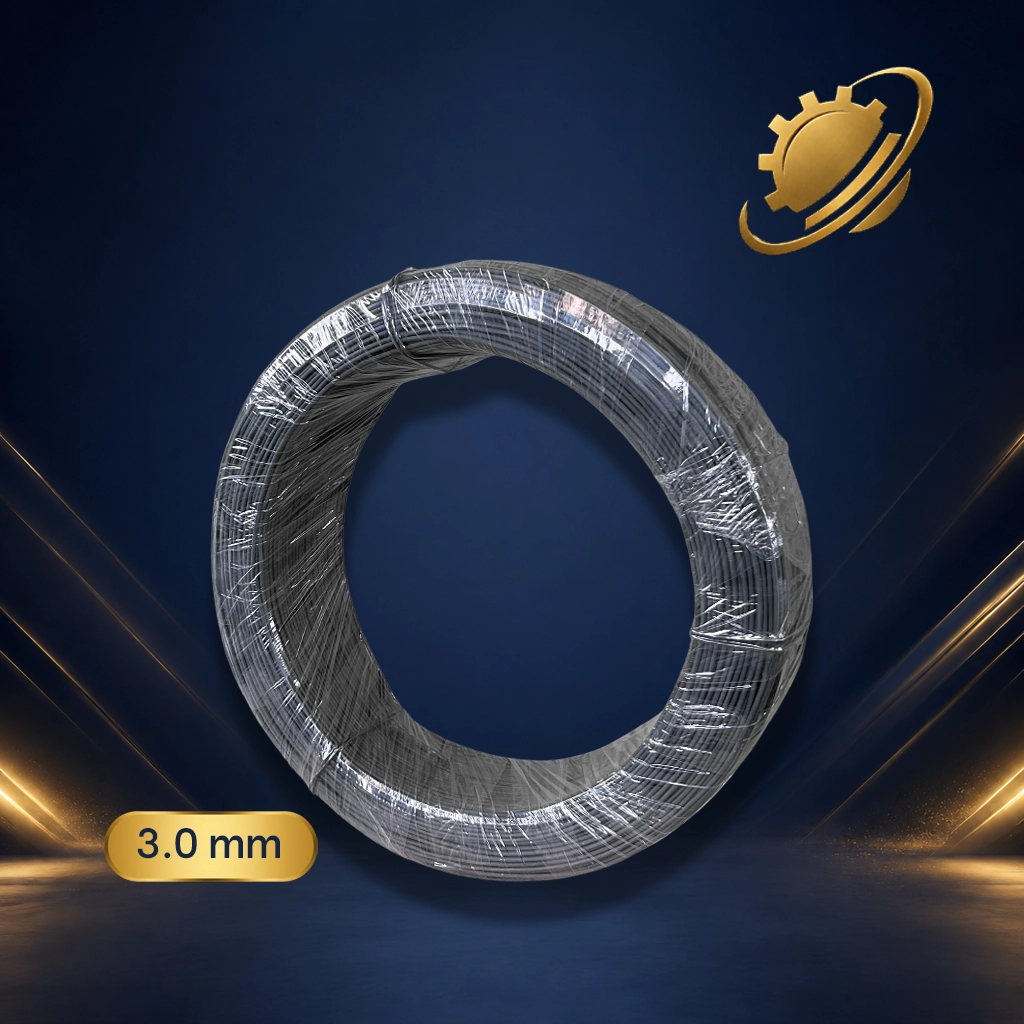
Key Takeaway: Zarrin Navard's 3.0mm black wire is a high-gauge, high-tensile strength product. Thanks to factory-grade raw materials and a precision annealing process, it is re View details
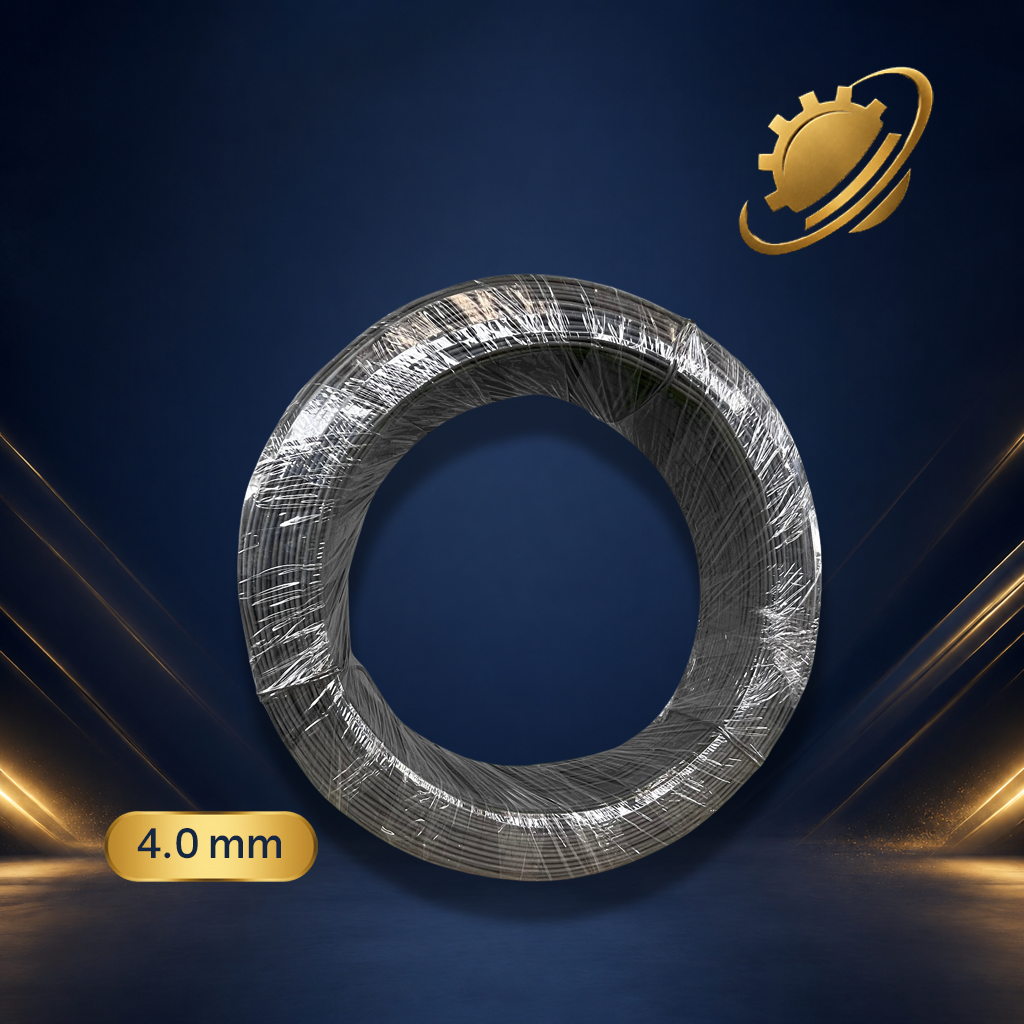
Key Takeaway: Zarrin Navard Spadana’s export-grade 4.0 mm black wire, produced from prime factory-grade raw materials, offers high strength, controlled flexibility, and stand View details
For a good fencing job, it is not only the mesh and posts that matter. The wire you use for tying, knotting, securing, and fixing has a direct impact on the final appearance of the fence, installation speed, and even the amount of rework required. Standard black fence wire is a popular choice for more precise projects because of its uniform quality and predictable performance during installation. If you are a contractor, wholesaler, or looking for a more standardized product for export, this page will help you make a more accurate choice.
Quick Take: Standard black fence wire is produced from controlled raw materials and adjusted through annealing to provide more uniform diameter and softness for fence installation.
Standard black fence wire is a type of annealed wire manufactured with better control over raw materials and the production process, resulting in greater uniformity in diameter and surface quality. Here, "standard" means consistent and reliable performance throughout the entire coil; in other words, the wire is less likely to surprise you during installation: it does not suddenly become brittle, nor does it become excessively soft and weak.
Because production involves greater control over diameter, heat treatment (annealing), and surface quality. This makes it a better option for projects where cleanliness and execution quality matter.
Annealing makes the wire softer and more workable for tying and twisting, while reducing the chance of micro-cracks or breakage during fastening.
Quick Take: Uniform diameter, suitable flexibility, and better formability make standard fence wire easier to install and capable of delivering a cleaner result compared to miscellaneous alternatives.
One of the most important advantages of standard wire is that the wire diameter shows very little variation throughout the coil. What does this mean for the installer? It means more uniform knots, better control of fence tension, and a more professional-looking final result.
The wire must be soft enough to tie easily, but not so lifeless that it cannot maintain tension. Standard annealed wire usually preserves this balance better than economic-grade models.
In fencing work, you are constantly twisting, knotting, and fixing. Thanks to more uniform annealing, standard wire offers more stable formability and causes less fatigue for the installation crew.
If you have an industrial project, or the client is sensitive about appearance and quality, or the final product is intended for sale/export, this wire helps ensure the output is uniform and dependable.
Quick Take: This wire is widely used in fencing, industrial projects, and the production of fences with more consistent quality, resulting in cleaner execution.
For tying mesh to tension wires, fastening to posts, side knots, and securing sensitive نقاط, standard wire is a more reliable choice, especially when the work volume is high and installation speed matters.
In workshops, industrial sites, civil projects, and shed construction, connection accuracy and durability usually matter. The uniformity of this wire helps make joints more reliable and reduces rework.
If you are a fence manufacturer or a producer of panels and mesh, using standard wire helps make the final product more uniform both in appearance and in performance.
Quick Take: Compared with sheet-edge wire, standard wire offers more uniform diameter and more predictable installation performance, which increases its purchase value in sensitive projects.
| Comparison Factor | Standard Fence Wire (Grade 1) | Sheet-Edge Fence Wire (Economic) |
|---|---|---|
| Diameter Uniformity | Very high; no fluctuation throughout the coil | Moderate; dimensional tolerance and diameter variation may occur |
| Raw Material Quality | Controlled billet and original wire rod | Steel sheet edges and trims (non-original) |
| Installation Performance | Fast installation, regular knots, and stable tension | Economical installation; irregular knots may appear under high tension |
| Surface Appearance and Cleanliness | Completely smooth and uniform (ideal for galvanizing or painting) | Ordinary; suitable for uncoated fencing |
| Most Suitable Project Type | Permanent, export-oriented, industrial, and sensitive projects | Temporary projects, workshop enclosures, and general applications |
| Purchase Value | Long-term quality stability and reduced rework | Lower initial cost and strong economic justification |
| Recommended Quality Test | Material analysis certificate and diameter uniformity check | Manual knot test and softness/annealing check |
In sheet-edge wire, diameter variation along the coil may be greater. During installation, this may show up as irregular knots or differences in tension. In standard wire, this risk is lower.
Sheet-edge wire is produced from steel sheet edges and may therefore be more variable in its properties. In standard wire, the raw material is more controlled, resulting in more stable output quality.
If the project is simple and temporary, sheet-edge wire can be an economical option. But if your goal is clean execution, fewer errors, and reliable output, standard fence wire is the better choice.
Quick Take: For a successful purchase, check the project-appropriate size, the type of fencing, and the uniformity of the coil so you can avoid rework during installation.
The size depends on the type of fence, the amount of tension, and the connection method. For general applications, medium sizes are usually more popular, but if you have higher tension or need stronger connections, thickness selection should be made more carefully.
- Industrial fencing and workshop enclosures
- Fence installations where appearance matters
- Projects where fast and trouble-free installation is a priority
- Fence production for sale or export (due to better uniformity)
- Diameter uniformity throughout the coil
- Annealing quality and softness level (manual knot test)
- Coil weight and packaging consistency
- Surface cleanliness (if painting or coating will be applied later)
- Supplier credibility and production batch consistency
Quick Take: The price of standard fence wire depends on diameter, raw material quality, coil weight, and current steel market conditions.
The greater the diameter, the higher the material weight and the higher the coil price. Diameter selection should match the real needs of the project so that you do not pay extra costs unnecessarily.
More uniform raw materials and stricter quality control increase production cost, but this is exactly what pays back during installation through reduced waste and higher working speed.
Daily steel prices, transport costs, market availability, and the project execution season can all cause price fluctuations. For bulk purchases, obtaining a daily quotation and placing the order faster is usually the more rational approach.
Quick Take: The most common buyer questions are about suitability for fencing, the difference from sheet-edge wire, and the choice of common sizes.
Yes, it is specifically chosen for this purpose, especially when you want uniform knots and trouble-free installation.
Standard wire usually has more uniform diameter, better surface quality, and more stable installation behavior. Sheet-edge wire is more economical, but it may show greater variation.
Common sizes vary depending on the type of fence and installation method. For an accurate choice, it is better to determine the mesh type, post spacing, and required tension first, and then finalize the size.
It is a better choice for industrial projects, more permanent fencing, jobs where execution appearance matters, and also fence production for sale or export, because it offers greater uniformity and workability.
Yes, because it behaves consistently throughout the coil, the installer faces fewer stiff or brittle sections, and work speed increases.
In practice, you see the difference in more uniform knots, better tension control, reduced tearing, and less rework, not just in the price figure.
Black wire has no protective coating and will rust under continuous moisture exposure. If your environment is humid or outdoors with heavy rainfall, galvanized wire is usually a more reliable choice.
Take a test sample, check diameter uniformity and softness, carefully verify coil weights, and buy from a supplier that maintains consistent quality across production batches.
All material and intellectual property rights reserved by Zarin Navard Espadana Company.
Designed by Nemovweb Website Design and Digital Marketing Agency.