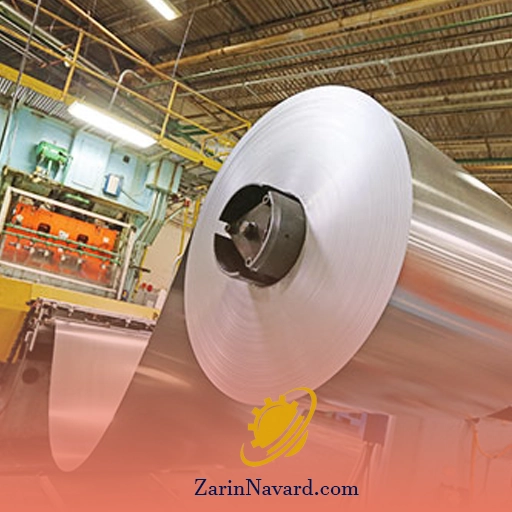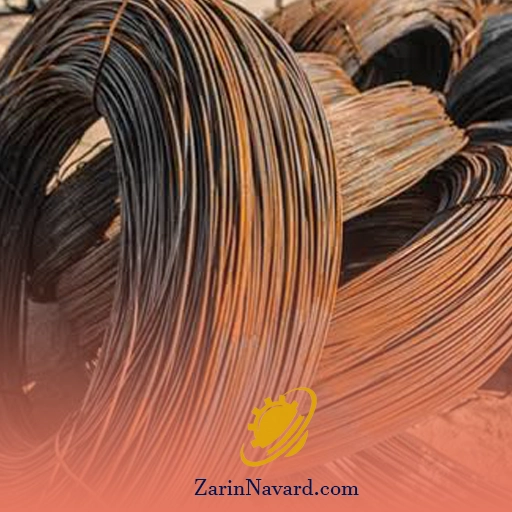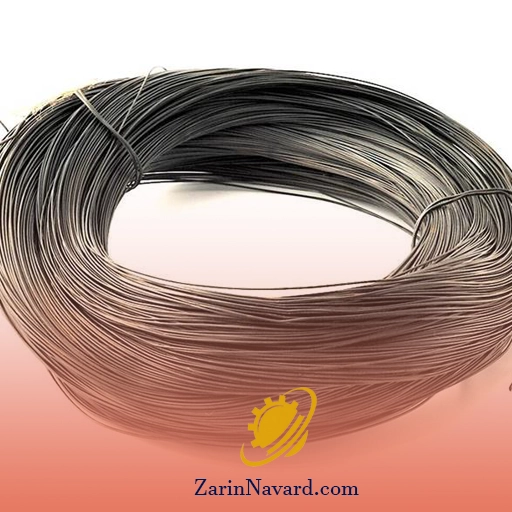
What is Hot Rolling and What is its Role in Steel Wire Production?
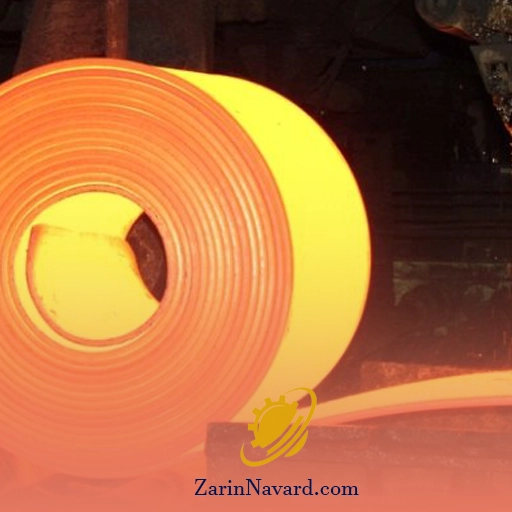
hot rolling in wire rod production
What is Hot Rolling?
Key Takeaway: Hot rolling is a process in which steel is shaped at high temperatures to reduce its dimensions and prepare it for the production of products such as wire rod and wire.
Definition of Hot Rolling in the Steel Industry
Steel hot rolling is one of the most fundamental methods of metal forming. In this process, after heating, the steel ingot or billet is passed between several rolling stands to decrease its thickness or diameter and increase its length. Due to its high speed and mass production capability, this method holds a very important place in the steel industry.
At what temperature is hot rolling performed?
Hot rolling is usually performed at a temperature above the recrystallization temperature of steel. This temperature is often higher than 900 degrees Celsius, and in many production lines, depending on the chemical composition of the steel, it reaches about 1100 to 1250 degrees Celsius.
How is the Hot Rolling process performed?
The hot rolling process begins with the entry of the steel billet into the furnace. After reaching the appropriate temperature, the billet passes through several stages of rolling stands. In each stage, the diameter decreases and the length increases until eventually a product like wire rod is obtained.
What is the difference between Hot Rolling and Cold Rolling?
The main difference lies in the temperature and the final goal. Hot rolling is used for initial shaping, mass production, and reduction of primary dimensions, while cold rolling is used to achieve higher precision, a better surface, and specific mechanical properties.
What is the role of Hot Rolling in wire production?
Key Takeaway: Hot rolling is the main stage of converting a steel billet into wire rod, and without it, industrial-scale steel wire production is not possible.
Why is hot rolling considered the main stage of wire production?
Because the raw material for wire must first be converted from a billet state into a narrower and processable cross-section. This economic and industrial conversion is only possible with hot rolling.
The relationship between hot rolling and wire rod production
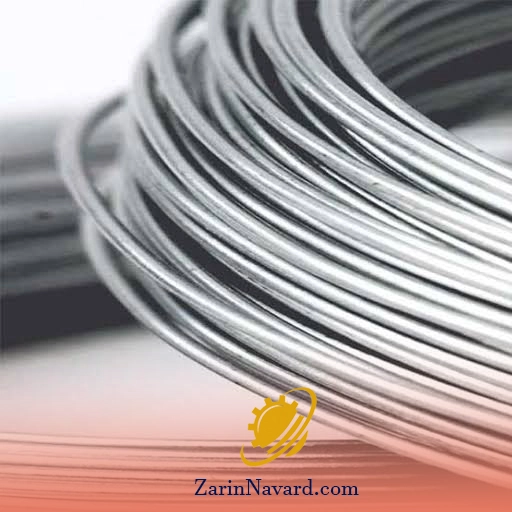
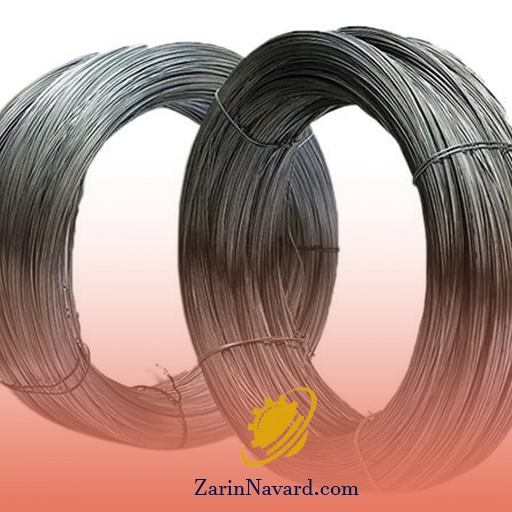
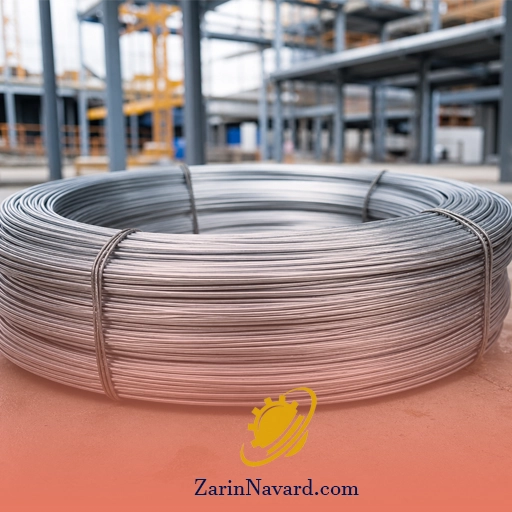
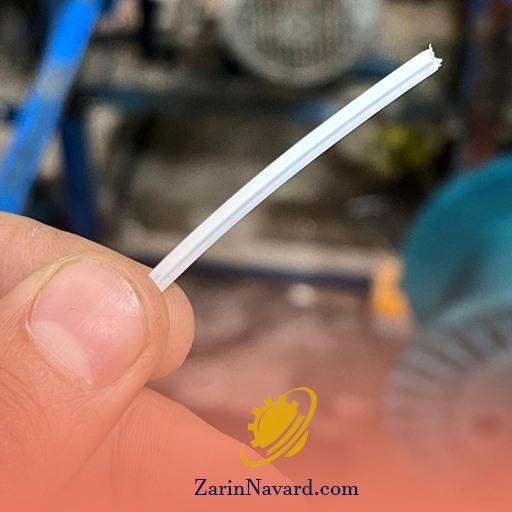
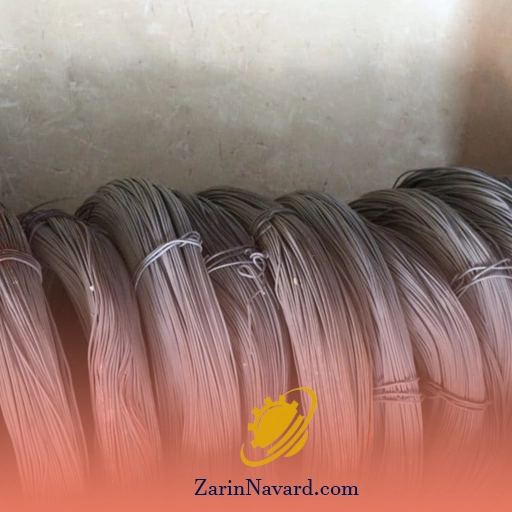
What is wire rod? Wire rod is a coiled steel product obtained from hot rolling, which is converted into final wire in subsequent stages. In fact, wire rod is the intermediate link between steel billet and steel wire.
How is a steel billet converted into wire?
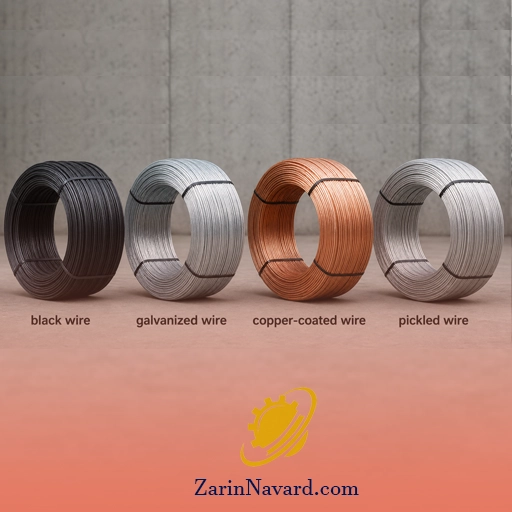
The billet is first converted to wire rod in hot rolling. Then, if necessary, the wire rod enters processes such as pickling, cold drawing, annealing, or galvanizing to be converted into the final wire with the desired characteristics.
What effect does hot rolling have on wire quality?
Hot rolling quality directly affects diameter uniformity, drawability, flexibility, and wire strength. Any fluctuation in temperature or rolling speed can affect the quality of subsequent stages.
Stages of wire production using hot rolling
Key Takeaway: Wire production with hot rolling starts with billet preparation and reaches the intermediate product stage through cooling and coiling.
Preparation of steel ingot or billet
Production quality starts with the raw material. The steel billet must be controlled in terms of chemical composition, dimensions, and surface integrity so that it does not crack or distort during rolling.
Billet heating in the furnace
The billet is heated in the furnace to the appropriate temperature to become malleable. If the heating is not uniform, the final output will not be uniform either.
Passing through rolling stands
The heated billet enters the rolling stand and is gradually shaped by the pressure of the rollers. Each stand performs a part of the diameter reduction.
Diameter reduction and length increase in the rolling process
The principle of the hot rolling process is based on decreasing thickness and increasing length. It is this change in dimensions that turns the billet into a suitable product for wire production.
Cooling and coiling the wire
After rolling, the product must be cooled in a controlled manner. Then it is collected in the form of a coil to be ready for transport, storage, or subsequent processes.
Characteristics of wire produced by hot rolling
Key Takeaway: Wire resulting from hot rolling usually has suitable strength, acceptable flexibility, and high potential for further processing.
Strength and flexibility of hot-rolled wire
If rolling is done correctly, the resulting wire can have a good balance between strength and formability. This balance is very important for cold drawing and producing secondary products.
Surface and appearance of wire produced by hot rolling
The surface of hot-rolled wire is usually rougher than cold-rolled product, but it is considered quite suitable and standard for many industrial applications.
Dimensional accuracy and uniformity in wire production
Precise control of the rolling line increases dimensional accuracy. Diameter uniformity is one of the important quality indicators in steel wire production.
Why is hot-rolled wire suitable for cold drawing?
Because hot rolling produces a base product that is structurally ready to enter finishing processes. If the chemical composition and cooling are correct, the wire rod draws well.
Advantages of hot rolling in wire production
Key Takeaway: Hot rolling is the best starting point for steel wire production due to its high speed, lower cost, and suitability for mass production.
Reducing wire production costs
Compared to many other methods, hot rolling is more economical in terms of energy consumption per unit of production and high volume.
Increasing production speed in steel lines
Hot rolling lines are designed for continuous production and can produce a high volume of product in a short time.
Improving steel formability
High temperature makes steel easier to deform and reduces the risk of breakage in the initial stages.
Suitability for industrial mass production of wire
If the goal is industrial and extensive wire production, hot rolling is practically the best and most common option in the production chain.
Difference between hot rolling and cold rolling in wire production
Key Takeaway: Hot rolling is used for initial production and cold rolling for final improvement of wire characteristics.
Difference in terms of temperature and forming method
Hot rolling is performed at high temperatures, and cold rolling at ambient temperature or close to it. This difference changes the metal's behavior and the final result.
Difference in terms of wire surface quality
Cold-rolled product usually has a smoother surface and more precise tolerance, but hot-rolled product is quite suitable for many basic applications.
Difference in terms of industrial application
Hot rolling is mostly used in the initial stage of wire rod production and steel sections, while cold rolling or cold drawing is used to produce more precise wires.
Which method is better for wire production?
This question depends on the production goal. For basic and mass production, hot rolling is better. To achieve more precise dimensions and a better surface, subsequent stages like cold drawing are complementary.
Applications of wire produced from hot rolling
Key Takeaway: Wire produced from hot rolling is the raw material for many downstream industries.
Application in construction
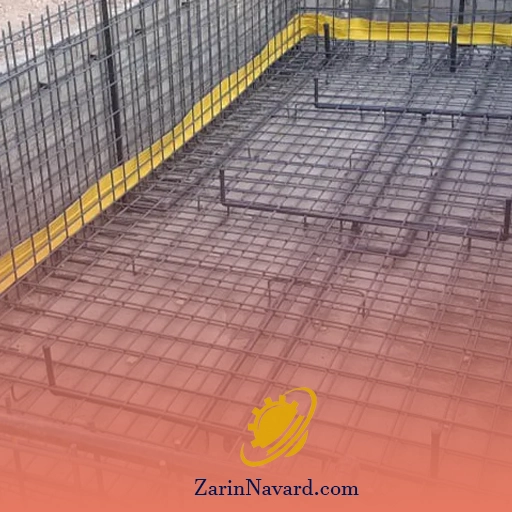
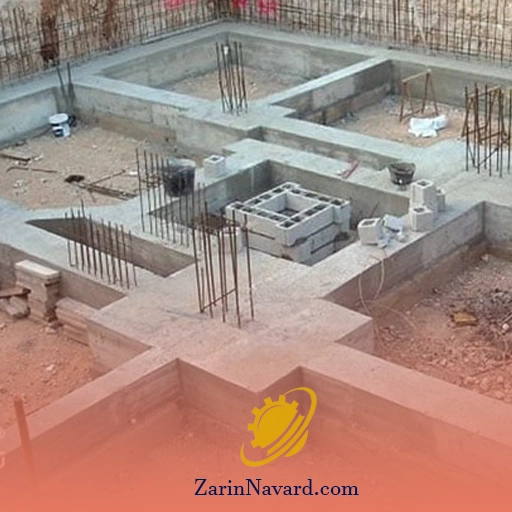
In construction, wire is used for reinforcement (rebar tying), lathing, bracing, and packaging.
Application in wire and cable industry
Some types of steel wire are used in the production of auxiliary components and parts of the wire and cable industries.
Application in producing mesh, nails, and metal parts
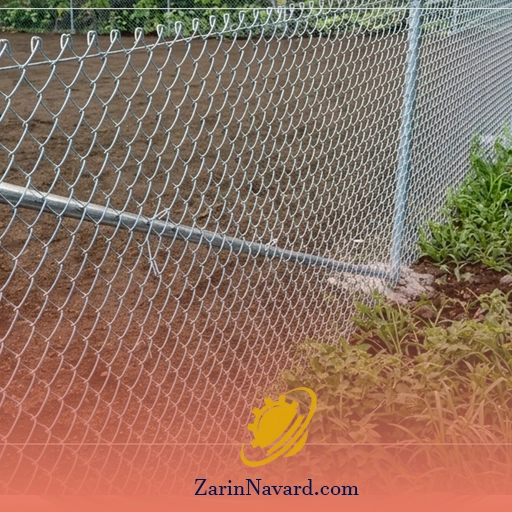
Mesh, nails, springs, fittings, and many light metal parts are made from wire produced from wire rod.
Application of wire in drawing and galvanizing processes
A large part of the produced wire rod enters the cold drawing or galvanizing line to be prepared for specialized applications.
Factors affecting hot rolling quality in wire production
Key Takeaway: The quality of the final wire depends on the billet quality, temperature control, rolling speed, and cooling.
Quality of the initial billet
If the billet has impurities, cracks, or chemical composition fluctuations, these defects are intensified in the final stage.
Rolling temperature control
Temperature must be controlled throughout the production path. Inappropriate temperature can lead to a drop in surface quality or unbalanced mechanical properties.
Speed of passing through rolling stands
The speed of passage must be coordinated with the type of steel and the line design. Inappropriate speed may reduce product uniformity.
Cooling system and final control
Final cooling has a serious effect on the metallurgical structure and subsequent behavior of the wire. For this reason, this stage is a vital part of product quality.
Frequently Asked Questions about hot rolling and wire production
Key Takeaway: Most common questions about hot rolling relate to its difference from cold rolling, its role in wire rod production, and wire quality.
What is hot rolling in simple terms?
It means heating steel to a high temperature and then passing it between rollers to make it thinner and longer.
What is wire and how is it produced?
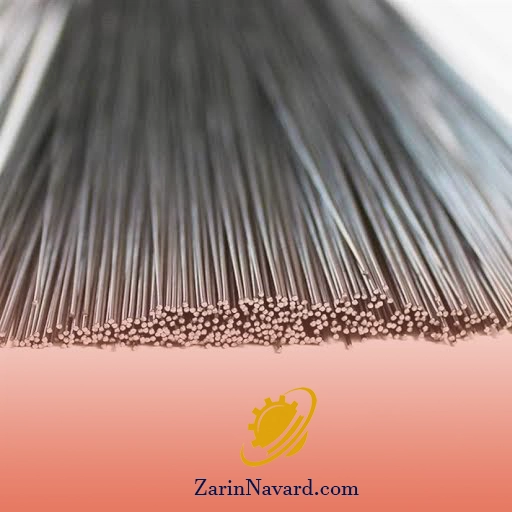
Wire is a narrow and long steel product that is usually produced from wire rod resulting from hot rolling and then finishing operations.
Is wire always produced with hot rolling?
Almost in industrial scale, yes. The initial stage of wire production starts from hot rolling, but it may be completed with cold drawing or coating.
What is the difference between wire rod and wire?
Wire rod is the intermediate coiled product obtained from hot rolling, but wire is usually the final or semi-final product processed from wire rod.
What is the best raw material for wire production?
Steel billet with controlled chemical composition, suitable surface quality, and uniform structure is considered the best raw material for wire production.