Comprehensive Guide to Construction and Industrial Wire Types

a guide to types of industrial and construction wire
We all know wire, but when it comes to bulk purchasing or selecting material for a sensitive project, details matter. Construction wire is usually focused on workability in open environmental conditions and tying, while industrial wire has a vast world of dimensional accuracy, mechanical properties, and specialized applications.
Key Takeaway: To choose correctly, you should know that construction wire is designed for flexibility and connection, and industrial wire is designed for dimensional accuracy and specific mechanical resistances.
General Categorization of Wire by Application Field
General Characteristics of Construction Wire
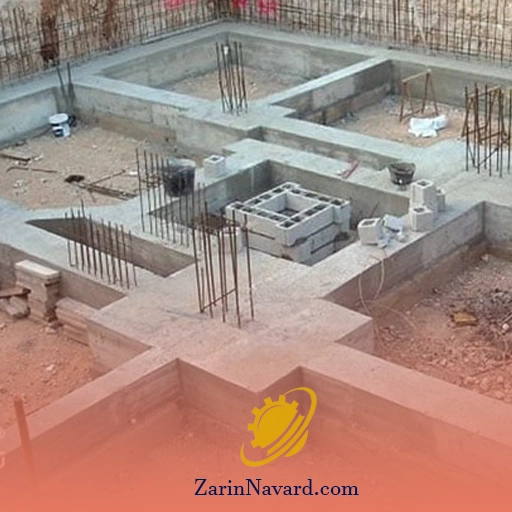
Construction wires are usually used for tasks like tying rebar, formwork, or fencing. Their most important feature is high flexibility so that human labor in the workshop can easily work with them. Resistance to rust (in galvanized types) and softness (in annealed types) are the main characteristics of this category.
Specifications and Features of Industrial Wire
Industrial wires are produced based on stricter standards. These wires may be used in processes such as re-drawing, copper plating (copper-coated), or manufacturing specific parts. Their main feature is very precise diameter tolerance and controlled mechanical properties, which are vital for industrial machinery.
Key Differences between Industrial and Construction Wires at a Glance
Construction wire usually has a rougher surface or black coating, and its dimensional tolerance might be a bit looser. In contrast, industrial wire has a very clean surface (oil-free or with special coatings) and its dimensions are controlled with millimeter precision so it does not get stuck in production machines.
Types of Construction Wire and Their Applications
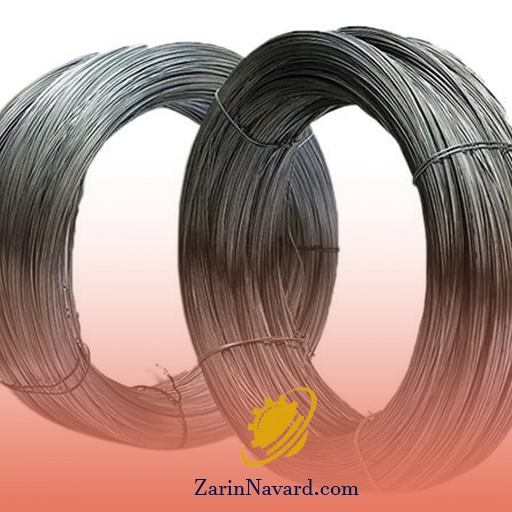
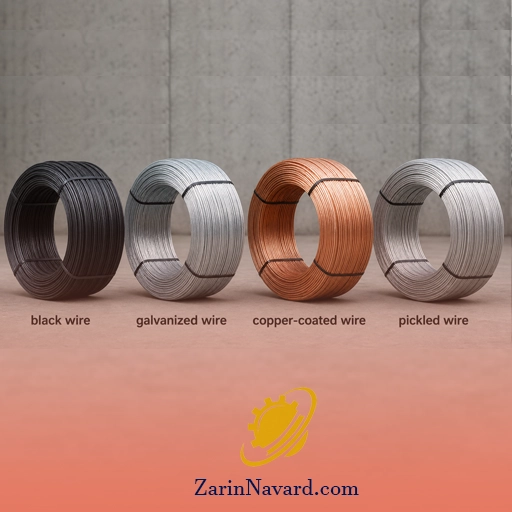
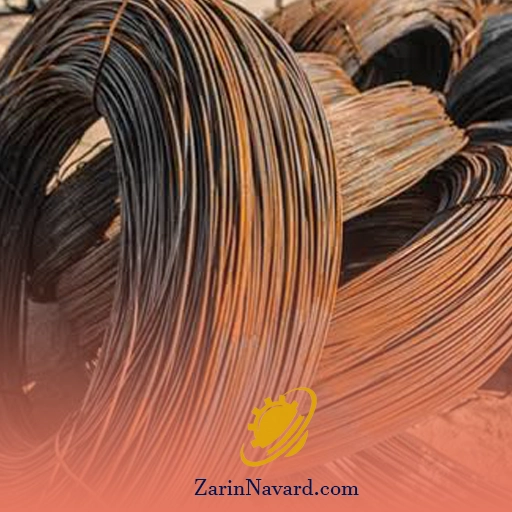
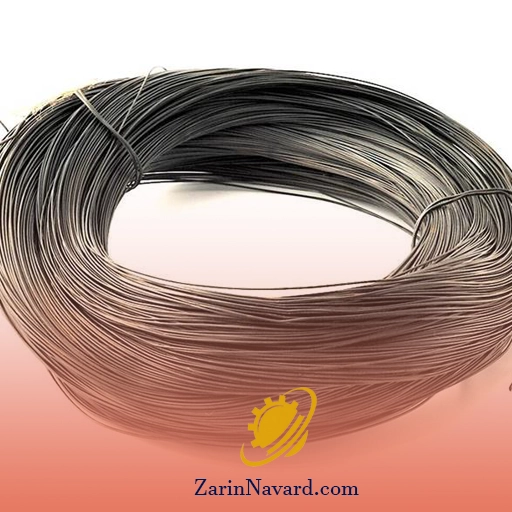
Black Wire (Annealed Wire) in Construction
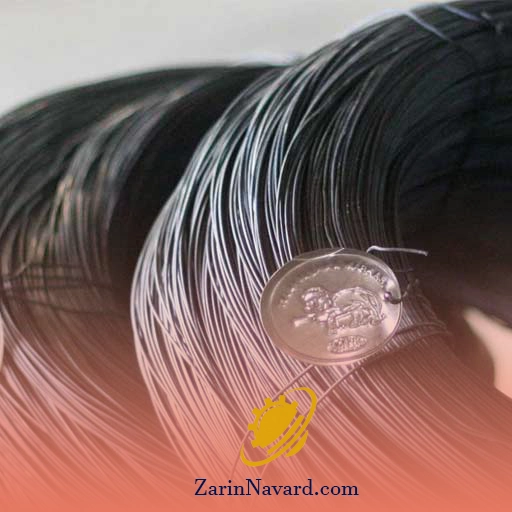
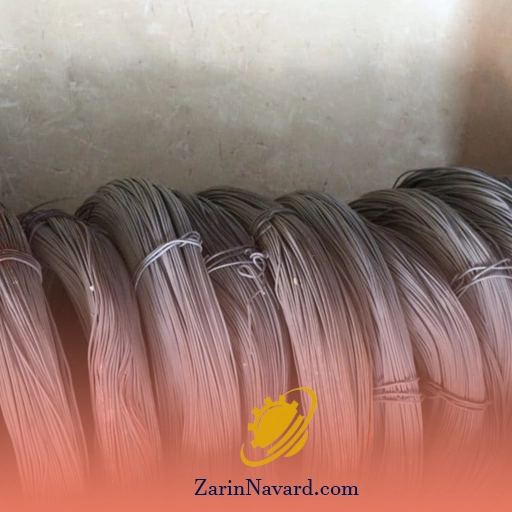
This is the famous wire of the market, baked in annealing furnaces to become soft and flexible. The foundation of construction work is this same black wire.
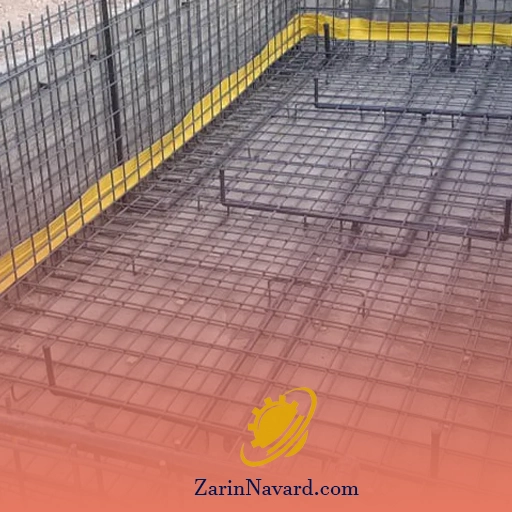
Rebar Tie Wire; The Most Common Construction Wire
If you are looking to tie rebar networks, this wire is your first choice. Read in the article What is rebar tie wire how its softness multiplies the speed of the rebar tier's work.
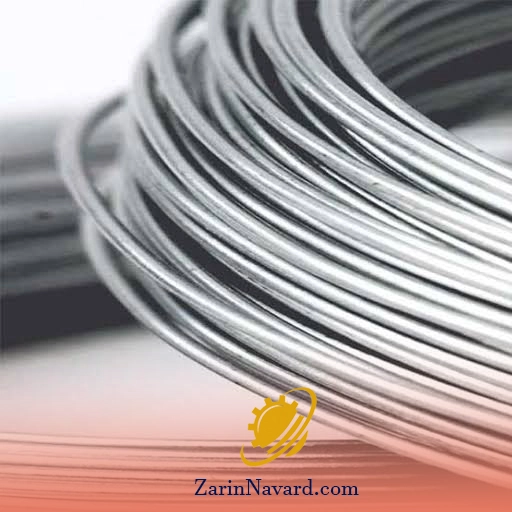
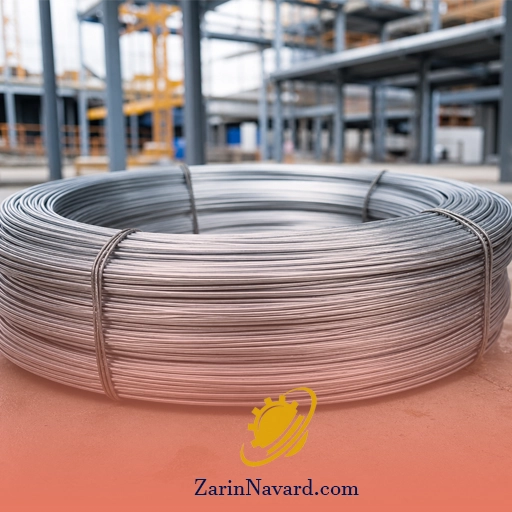
Galvanized Wire and Its Application in Structures
When you need the structure not to rust against moisture, go for galvanized wire.
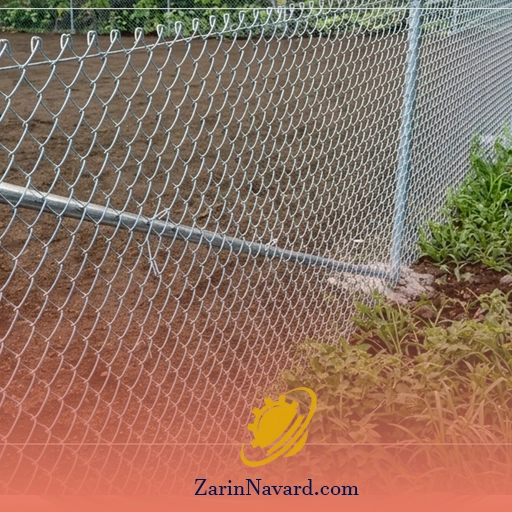
Barbed Wire and Protective Metal Meshes
For the security of workshop and construction environments, these products are the most used.
Types of Industrial Wire and Their Applications
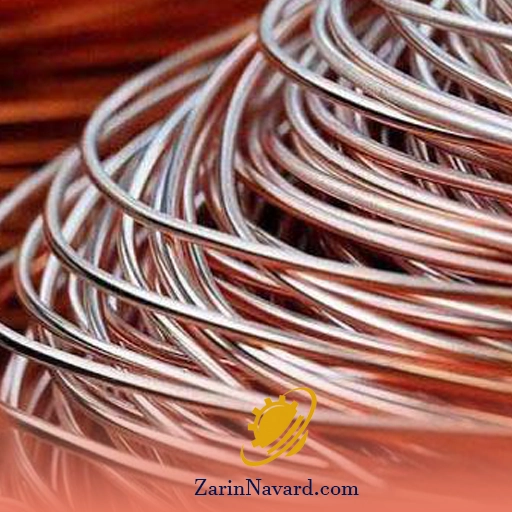
Copper-Coated Wire and Its Consumer Industries
Due to the thin layer of copper, this wire has a polished surface and is used for manufacturing parts like metal shelves or baskets.
Acid-Washed Wire and Specific Industrial Applications
Before drawing, this wire is washed in acid pools to remove its oxide scales and prepare it for manufacturing high-quality products.
Carbon and Alloy Wires for Heavy Uses
When you need high tensile strength, carbon wires enter the field; parts that must withstand heavy pressures.
Drawn Wire and Its Application in Parts Manufacturing Industries
This product is the raw material for many bolt and nut manufacturing workshops. Diameter accuracy is paramount here.
Types of Wire Based on Production Process and Coating
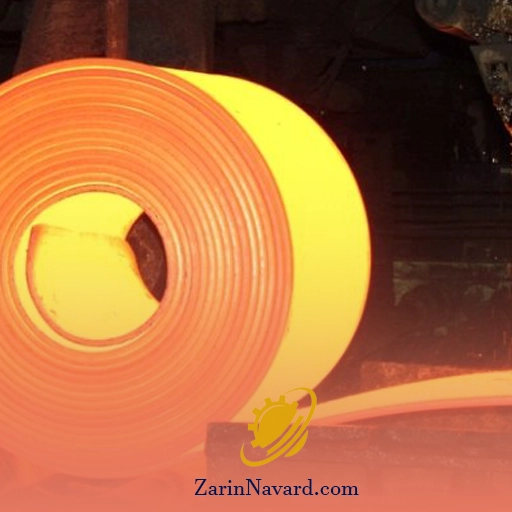
Hot Rolled Wire vs Cold Rolled Wire
The difference is in the production temperature and the molecular structure of the metal which determines the final properties.
What is Factory-made vs Non-factory Wire?
The difference is in the raw materials (pure ingot or scrap) which directly affects strength.
Hot and Cold Galvanized Wire
The difference is in the coating method which determines corrosion resistance.
Sizing and Standards of Wire Types in the Market
Common Sizes of Industrial and Construction Wire
From thin half-millimeter wires to thick sizes.
National and International Wire Production Standards
Compliance with standards means quality assurance and prevention of work accidents.
Diameter and Dimensional Tolerance in Wire Types
In industrial work, even a hundredth of a millimeter matters.
Important Criteria for Choosing and Purchasing Wire Types
Attention to Flexibility and Tensile Strength
Does the wire need to be bent or is it supposed to bear loads?
Checking Surface Quality and Rust Resistance
Surface quality determines the lifespan of your structure or product.
Guide to Selecting Wire Suitable for Project Needs
Wrong choice = extra cost.
Price of Industrial and Construction Wire Types
Factors Affecting Wire Prices
Ingot price, energy cost, drawing cost, and coating type.
Impact of Wire Type and Thickness on Procurement Costs
Ordering thicker wire does not always mean higher resistance, sometimes it only increases weight and cost.
Conclusion
Summary of Wire Applications in Industry and Construction
For tying and general tasks, black wire (construction); for manufacturing parts and high precision, copper-coated or drawn wire (industrial).
Quick Checklist for Categorizing and Choosing Wires
Before purchasing, write down the work environment, need for flexibility, weather conditions, and required dimensional accuracy. If you are hesitant in choosing, our experts are ready for consultation.
Frequently Asked Questions about Wire Types
Question: What is the main difference between industrial and construction wire?
Answer: Construction wire focuses more on flexibility and softness for construction workshops, while industrial wire focuses on dimensional accuracy, surface quality, and precise mechanical properties for parts production.
Question: Which wire is most used in the construction industry?
Answer: Black (annealed) wire, known as rebar tie wire, is the most consumed type in construction.
Question: Which wire type is more resistant to moisture?
Answer: Galvanized wire (whether hot or cold) has very high resistance to rust and moisture due to the zinc coating layer.
Question: What is the application of copper-coated wire in industry?
Answer: Due to the clean and polished surface resulting from the copper layer, this wire is used for manufacturing household appliances, metal shelves, baskets, and decorative industrial parts.