The Best Wire for Fencing: A Comprehensive Review of Wire Types
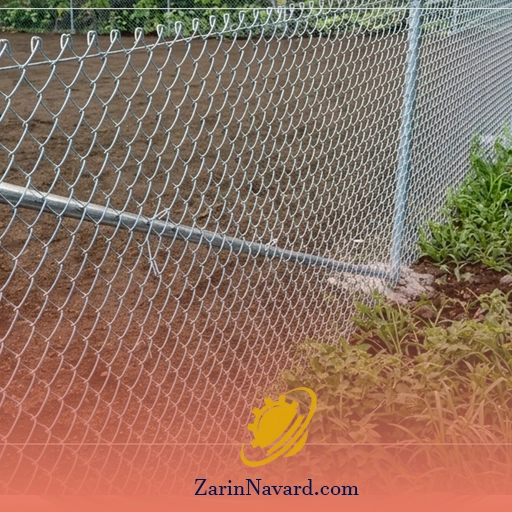
best wire for fencing and garden mesh types
Key Factors in Choosing the Best Wire for Fencing
To ensure your fence remains unchanged for years, you must carefully assess several environmental and physical factors before procuring materials.
Key Takeaway: Weather conditions, required security level, and environmental humidity are the most important factors in determining the type and thickness of fencing wire.
Environment Type and Weather Conditions (Humid vs. Dry)
Weather is the greatest enemy of uncoated metals. In humid, coastal, or rainy areas, using wires without a protective layer quickly leads to oxidation and the rotting of the entire protective structure.
Purpose of Fencing (Animal Protection, Demarcation, or High Security)
If the goal is simply to mark a land boundary, lighter wires can be used; however, to prevent wild animals from entering or to increase workshop security, wires with high thickness and a tougher structure are needed.
Durability and Corrosion Resistance (Why Galvanized?)
Zinc acts like a sacrificial armor in the galvanization process. This layer prevents direct contact of oxygen and moisture with the steel core of the wire and increases the useful life of the fence several times over.
Types of Wire Suitable for Fencing
Key Takeaway: Hot-dip galvanized and PVC-coated wires are the most suitable options for outdoor environments, while black wire does not have the necessary efficiency outdoors.
Hot-Dip Galvanized Wire; The King of Fencing in Open Environments
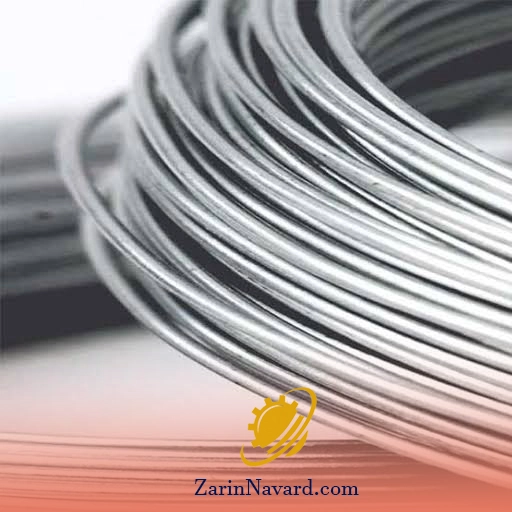
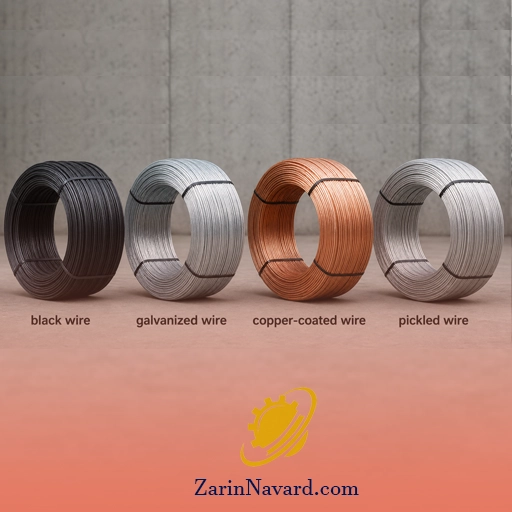
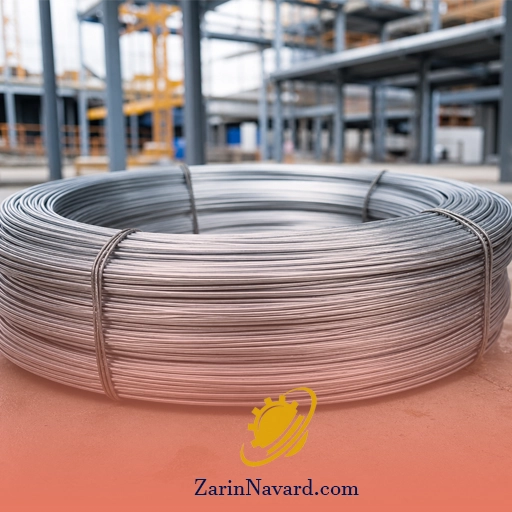
Hot-dip galvanized wire receives a thick and uniform coating due to immersion in a molten zinc bath. If you are looking for long life in harsh weather conditions, purchasing hot-dip galvanized wire is the best technical decision.
Black Wire (Annealed); Why is it not suitable for outdoor use?
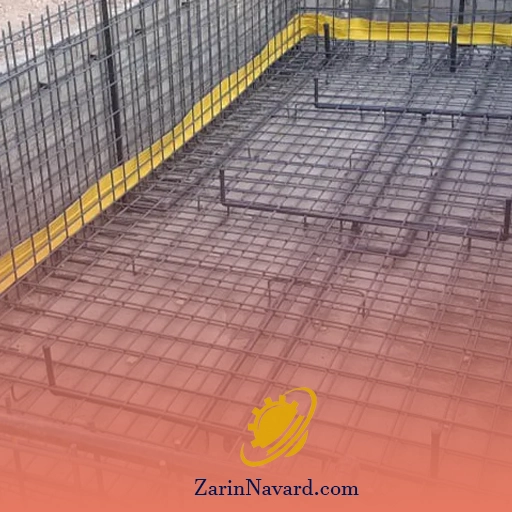
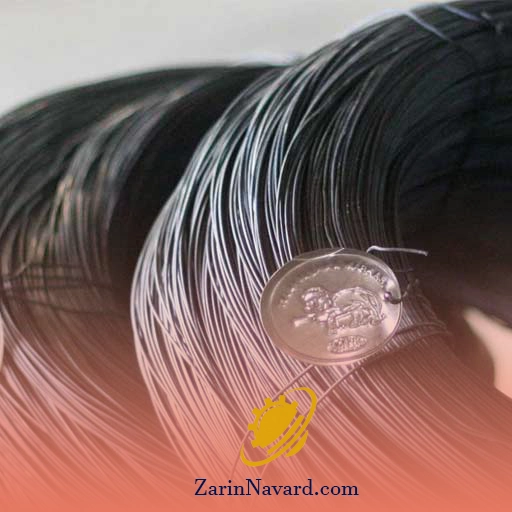
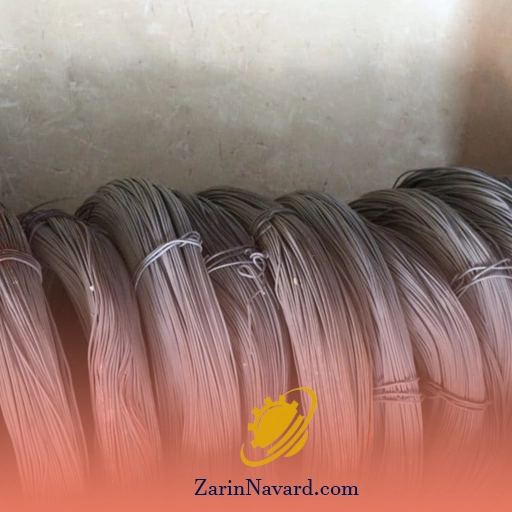
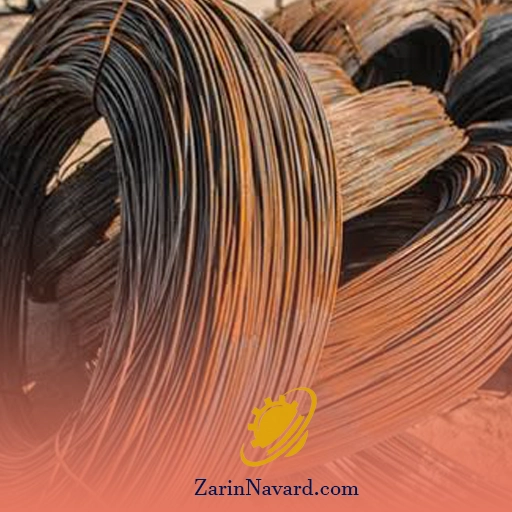
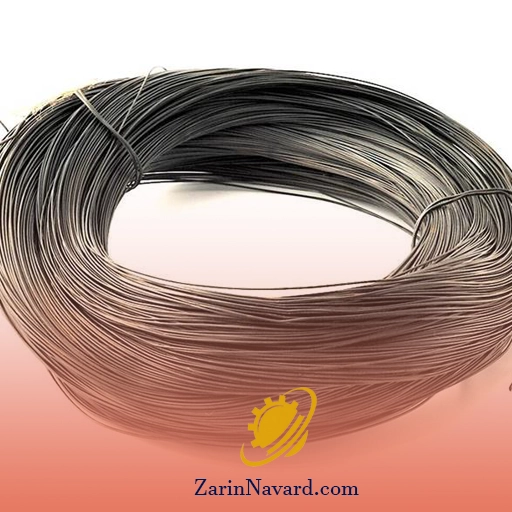
Black wire has no protective layer against moisture. Using it in outdoor environments causes the wire to rust in less than a few months, lose its strength, and eventually break.
Coated Wire (PVC); Beauty and Durability Against Moisture
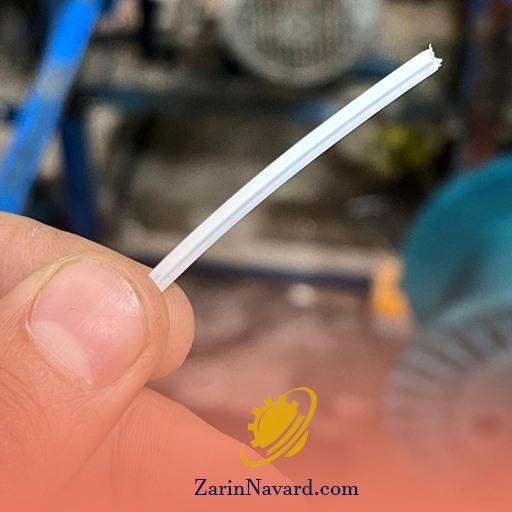
This type of wire, in addition to the galvanized layer, has a polymer PVC layer on it. This plastic coating prevents even the slightest moisture penetration and, due to color variety, gives a more beautiful appearance to gardens.
Barbed Wire; Specialized Solution for Maximum Security
In the upper sections of fences or independently, barbed wire (linear or coiled) is used. These wires, with their sharp edges, create a tough physical barrier against the passage of people or animals.
Reviewing the Best Wire Based on Application Type
Key Takeaway: Land usage (garden, mesh weaving, or scaffolding) determines the size and flexibility required for the wire.
Wire Suitable for Fencing Gardens and Agricultural Land
In agricultural lands, in addition to fencing around the land, wires are also used for side tasks. For more information in this area, you can read the article on special applications in agriculture.
Ideal Wire for Manufacturing Fences (Mesh and Chain-Link)
Mesh weaving machines need a wire that is flexible enough to be woven, yet maintains its shape after forming. Wire suitable for fencing usually has a diameter between 2 and 4 mm.
Wire Needed for Reinforcing Scaffolding and High Fences
High fences, due to exposure to severe wind force, need holding wires (wire rope or thick galvanized wires) to prevent the posts from tilting.
Best Wire for Protecting Livestock and Poultry Farms
For building cages and protective walls of livestock farms, a wire with medium diameter and hot-dip galvanized coating is ideal to resist animal waste (which has acidic properties).
Why is Galvanized Wire the Best Choice for Fencing?
Key Takeaway: Resistance to oxidation, tensile stability, and compatibility with humid soil are the reasons for this wire's superiority.
Advantage of Resistance to Rust and Oxidation
Zinc has very high resistance against moisture and acid rain. This feature ensures that galvanized wire retains its properties even in the vicinity of fog and intense coastal humidity.
Long Lifespan in Direct Contact with Soil and Moisture
Fence posts and the bottom sections of mesh are constantly in contact with damp soil and weeds. Galvanized wire prevents the mesh from rotting from the bottom of the structure.
Tensile Strength and Stability Against Wind Pressure and Impact
These wires are produced in such a way that they do not deform or suddenly loosen against tensile forces caused by wind or animal impact.
Examining the Difference Between Fencing Wire and Construction Wire
Key Takeaway: The main difference lies in the outer coating and the degree of flexibility of the steel used in the production process.
Difference in Resistance to Weather Factors
Construction wires (like black wires) are designed to work inside concrete or molds and do not need weather resistance, while fencing wire is built to resist sunlight and rain for a long time.
Difference in Coating Type and Production Process
In the production process of galvanized wire for fencing, high-purity zinc is applied so that the coating's adhesion to the steel is maintained during mesh weaving and does not crack.
Why shouldn't rebar tie wire be used for fencing?
Rebar tie wire is too soft, rusts quickly, and has a very small diameter. Using it for fencing means the rapid destruction of the fence with the first gust of wind or physical pressure.
Common Mistakes in Choosing Wire for Fencing
Key Takeaway: Choosing an unsuitable diameter or using cold galvanized wire will severely shorten the life of your fence.
Choosing an Unsuitable Size (Diameter) for Fence Height
For high fences (over 2 meters), thin wires cannot be used; because the mesh will sag and deform due to its own weight.
Using Low-Quality Wire with Weak Galvanized Coating
Cold galvanized wires have a very thin coating that is easily scratched during fence weaving or installation, opening a path for moisture penetration and rusting.
Ignoring Wire Tension and Fence Sagging Over Time
If fence guide wire with standard tension is not used during installation, the mesh will become loose after a few months and lose its upright state.
Guide to Maintenance and Extending Fence Lifespan
Key Takeaway: Proper installation, periodic tension control, and care for protective layers ensure the fence lasts.
Proper Installation Tips to Prevent Wire Wear
The wire should not be in direct contact with the sharp edges of iron posts. Using appropriate fasteners and insulators prevents wear on the protective coating.
Periodic Checking of Wire Tension in Long Fences
In large lands, seasonal temperature expansion and contraction can cause the reinforcements to loosen. Periodic tightening of guide wires helps maintain the stability of the fence.
Preventing Damage to Wire Protective Layers
During lawn mowing or working with agricultural tools near the fence, care must be taken so that no impact is made to the galvanized or PVC coating of the fence to avoid reducing its useful life.
Conclusion; How to Choose the Best Wire for Your Project?
Key Takeaway: The final choice must be a combination of assessing environmental conditions, required thickness, and using high-quality hot-dip galvanized wires.
Final Checklist Before Deciding on Wire Type
- Assess the level of humidity and salt in the region's air
- Determine the exact fence height and choose the appropriate wire thickness (at least 2.5 or 3 mm for standard work)
- Ensure the wire is hot-dip galvanized for permanent outdoor use
- Anticipate the use of barbed wire if higher security is needed
FAQ:
Question: What is the best wire for fencing gardens in rainy areas?
Answer: Hot-dip galvanized wire or PVC-coated wires are the best options due to their extraordinary resistance to rust.
Question: Can black wire be used for fencing?
Answer: No, black wire rusts quickly when exposed to air and moisture, and rots and breaks within a few months.
Question: What is the standard thickness of wire suitable for fencing?
Answer: Usually a diameter between 2.2 to 4 mm is used, depending on the fence height and the level of security required.
Question: What is the difference between hot and cold galvanization in fencing?
Answer: Hot galvanization has a thicker protective layer and is much more resistant to scratches and outdoor moisture than cold galvanization.
Question: What role does fence guide wire play in fencing?
Answer: This wire is tied horizontally at the top, middle, and bottom of the fence to prevent the mesh from sagging and loosening over time.