What Is Cold Rolling and How Is It Different from Hot Rolling? A Complete Guide to Cold Rolled Sheet
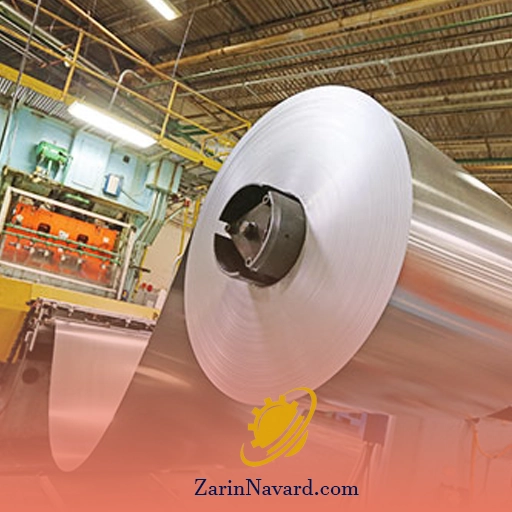
cold rolling and its differences from hot rolling
What Is Cold Rolling and What Is Its Purpose?
Quick takeaway: Cold rolling is a process for reducing thickness and improving steel surface quality at low temperature, producing a more precise product better suited for sensitive industrial applications.
Technical Definition of the Cold Rolling Process
Cold rolling refers to a process in which steel sheet or strip passes through rollers without being heated to the recrystallization temperature range, in order to reduce its thickness. This method is mainly used to produce cold rolled sheet and products with high dimensional accuracy.
At What Temperature Is Cold Rolling Performed?
This process is usually performed at room temperature or near it. The main difference from hot rolling is that the metal does not enter the thermal softening zone during cold rolling, and this affects the final properties.
Why Do We Use Cold Rolling? (Production Goals)
The main goal is to achieve a smoother surface, more accurate dimensions, better thickness control, and more predictable mechanical properties. In many industries, these features are more important than production speed itself.
Main Stages of the Cold Rolling Process in a Plant
Cold rolling usually begins after surface preparation. The sheet enters continuous rolling stands, its thickness is reduced, and if needed, annealing is carried out to restore formability.
Key Differences Between Cold Rolling and Hot Rolling
Quick takeaway: The most important differences between cold rolling and hot rolling are temperature, appearance, dimensional accuracy, strength, and production cost.
Operating Temperature Difference; What Is the Recrystallization Boundary?
In hot rolling, steel is shaped above the recrystallization temperature, but in cold rolling this temperature is not exceeded. The recrystallization boundary is the point at which the metal structure can be rebuilt again due to heat.
Difference in Surface Quality and Final Product Appearance
Cold rolled sheet or cold rolled sheet with oil has a smoother, shinier surface and is more suitable for painting, coating, and precise forming. In contrast, hot rolled sheet has a rougher, oxidized surface.
Comparison of Dimensional Accuracy and Tolerance in Cold and Hot Rolling
In cold rolling, dimensional tolerance is more precise and thickness control is better. This is very important for parts that must be assembled with high accuracy.
Mechanical Properties and Final Sheet Strength
Cold rolling usually causes strain hardening and increases the yield strength of steel. However, if formability is required, annealing is performed to balance the properties.
Price Differences and Production Costs in the Two Methods
Due to more operations, stricter quality control, and additional finishing stages, cold rolled products are generally more expensive than hot rolled products. However, in many applications, this extra cost is fully justified.
| Feature | Cold Rolling | Hot Rolling |
|---|---|---|
| Appearance | Smooth and shiny | Rough and oxidized |
| Dimensional accuracy | High | Medium |
| Strength | Higher due to strain hardening | Balanced |
| Price | Higher | Lower |
| Application | Precision parts, cold rolled sheet | General structures, hot rolled sheet |
Advantages and Disadvantages of Cold Rolling
Quick takeaway: Cold rolling improves surface quality and precision, but increases production cost and complexity.
Why Should We Use Cold Rolled Products? (Advantages)
- Precise and stable dimensional accuracy
- Suitable surface for paint and coating
- Better strength in many grades
- Suitable for delicate and sensitive products
What Are the Limitations of Cold Rolling? (Disadvantages)
- Higher production cost
- Greater need for finishing operations
- Reduced formability due to strain hardening
- High dependence on the quality of the base sheet
What Products Is Cold Rolling Suitable For?
This method is suitable for cold rolled sheet, car body parts, home appliances, precise profiles, and many precision industrial components.
The Cold Rolling Production Process; From Billet to Final Product
Quick takeaway: Cold rolled production is not just rolling through rollers; it is completed with surface preparation, thickness reduction, and heat treatment.
The Role of Pickling in Surface Preparation
Hot rolled sheet is usually pickled before cold rolling so that the oxide scale is removed from the surface and the sheet becomes ready for subsequent rolling.
Thickness Reduction in Cold Rolling Stands
After preparation, the sheet enters the rolling stands and its thickness is reduced in a controlled manner. This stage is the basis of forming in cold rolling.
Annealing Heat Treatment and Steel Reheating
When steel becomes hard due to cold rolling, annealing is performed to restore formability. Simply put: it is like kneading dough; whenever the dough becomes stiff, it needs some rest and re-preparation so it can be shaped again.
Final Skin Pass Operation for Surface Smoothness
The final light pass through rollers improves surface smoothness, uniformity, and prepares the product for end use.
Industrial Applications of Cold Rolling
Quick takeaway: Cold rolling is used in industries where appearance, accuracy, and surface quality are highly important.
Application in the Automotive and Parts Manufacturing Industry
In car bodies, interior parts, brackets, and precision components, cold rolled sheet is widely used because of its surface quality and high accuracy.
Use in Home Appliances and Construction Industries
Refrigerator bodies, washing machines, metal cabinets, and some building components are made from cold rolled products.
Production of Various Profiles and Special Steel Sections
Many light profiles and precise sections are produced from cold rolled sheet or from raw materials derived from it.
Frequently Asked Questions About Cold and Hot Rolling
Quick takeaway: Most users ask about price, differences from hot rolled sheet, and cold rolling applications.
Are Cold Rolled Products Cheaper?
No, they are usually more expensive because they require more production and quality control stages.
What Is Hot Rolled Sheet and How Is It Converted into Cold Rolled Sheet?
Hot rolled sheet is a product of hot rolling, and to become cold rolled sheet, it must go through pickling, cold rolling, and if needed, annealing.
Which Method Is Better for High-Precision Parts?
For parts that require high dimensional accuracy and a better surface, cold rolling is the more suitable choice.
Practical Conclusion
Quick takeaway: If surface quality and accuracy matter to you, cold rolled sheet is the more professional choice; if cost and primary production are more important, hot rolling is the more economical option.
Cold rolling is, in fact, the industry’s solution for producing sheet that is precise, clean, and reliable. In contrast, hot rolling mainly serves as the base production method. Therefore, in industrial purchasing, choosing between these two is not just choosing between two products, but choosing between two different levels of quality, price, and application.