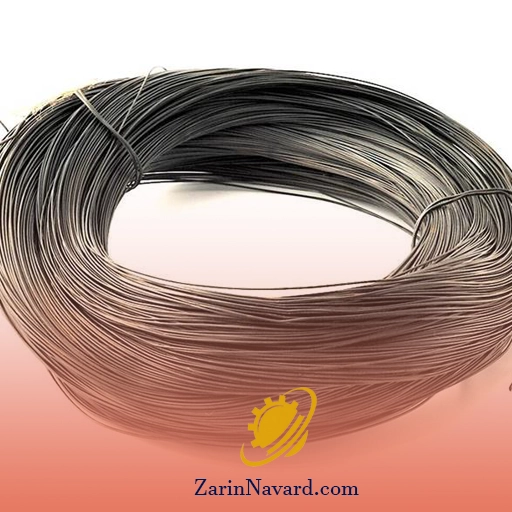
Steel Wire Price; A Comprehensive Guide to Market Influencing Factors and Direct Purchasing
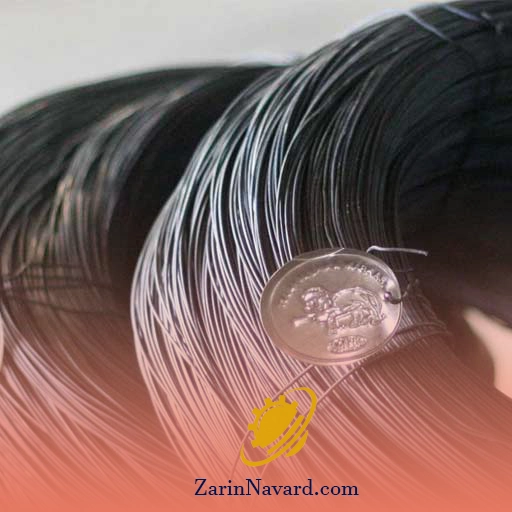
wire rod price guide market factors and buying tips
Purchasing steel wire at a reasonable price and high quality is one of the main concerns for those active in the construction and manufacturing industries. Market fluctuations in the iron trade necessitate that buyers familiarize themselves with the pricing structure of this product before taking any action.
Why is the price of steel wire constantly changing?
Key Takeaway: The wire market is a volatile market dependent on global raw material prices and exchange rates, influenced by macroeconomic indicators.
You have likely experienced that sometimes the price of wire at the beginning of the week is different from the end of the week. This is not accidental. As one of the main steel derivatives, steel wire is highly sensitive to the pulse of global and domestic markets. Any change in the commodity exchange or major economic decisions is directly reflected in the price of this product.
The impact of supply and demand in the commodity exchange
The supply volume of steel ingots and wire rods in the commodity exchange directly drives prices. In high-demand seasons like spring and summer, competition to buy raw materials intensifies, driving prices up.
Export policies and customs duties
Imposing duties on steel product exports or facilitating customs regulations for foreign sales can change the domestic distribution volume of wire and create price fluctuations.
The impact of raw materials (ingot and raw wire price) on the final price
Key Takeaway: The price of steel ingots, as the primary raw material, carries the most weight in determining the final price of steel wire.
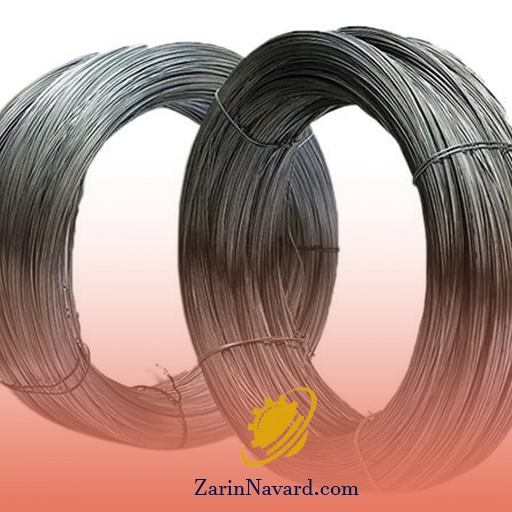
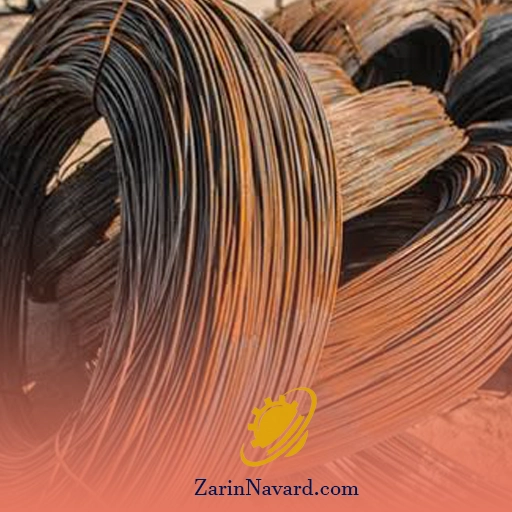
The production of black wire starts from wire rod or raw wire. When the price of steel ingots in the market rises, the cost of supplying raw materials for wire factories increases, and this cost increase reflects in the final product price.
Grade of steel used in the ingot
Using low-carbon ingots such as RST34, which offer better flexibility, results in different pricing compared to high-carbon ingots used for specific applications.
The share of wire rod cost in the cost price
More than 80% of the final price of steel wire is the cost of purchasing wire rod. Therefore, any fluctuation in large wire rod manufacturing plants directly transforms the wire price.
The role of exchange rates and global steel prices in the Iranian market
Key Takeaway: Exchange rate fluctuations, due to their impact on machinery part imports and product exports, are the main driver of daily wire price changes.
Even if raw materials are produced domestically, the exchange rate indirectly affects production costs. Spare parts for production lines and even international shipping tariffs are all linked to the exchange rate, meaning that when the dollar fluctuates, the price of wire does not rest.
Global ingot price fluctuations (LME)
Domestic steel pricing changes largely in sync with global steel prices in markets such as the London Metal Exchange.
The effect of inflation on factory operating costs
General inflation in society affects all overhead costs, including industrial lubricants, imported drawing dies, and kiln maintenance, raising the floor of the cost price.
Examining factors affecting the price of Black Annealed Wire (Our specialized product)
Key Takeaway: Transparency in the pricing of our black wire stems from the precise annealing process and the use of high-purity raw materials.
Why is the price of our black wire always logical? Because we invest in two main factors: first, the purity and quality of the raw material, which ensures the wire does not break during work; and second, the precise annealing (baking) process. Properly baked wire has uniform softness, which is a qualitative advantage that carries its own price.
Duration and temperature of the baking (annealing) process
Thorough baking of wire in standard pit furnaces requires time and optimal fuel consumption. High-quality annealed black wire must not have any signs of burns or surface impurities.
Flexibility and softness level of the wire
Due to the use of advanced thermal formulas, our wires have extraordinary softness, which reduces rebar tying time and satisfies master builders.
The impact of technical specifications (size and thickness) on cost price
Key Takeaway: The longer the wire drawing process to reach thinner sizes, the higher the production cost and consequently the price.
You might imagine thinner wire should be cheaper, but in reality, it is the opposite! Producing finer sizes requires a higher number of drawing passes and higher energy expenditure, which raises production costs.
Comparison of production costs for size 1.5 vs. size 4
To convert raw wire to 1.5 mm size, the wire must pass through several dies, which significantly increases machine depreciation and power consumption.
Dimensional tolerance and thickness precision
Producing wire with precise sizing and no diameter fluctuation along the coil requires calibrated equipment and expensive dies, and this high precision adds value to the product.
Production costs; from fuel and energy to labor wages
Key Takeaway: Operating costs of production, including kiln electricity consumption and specialist wages, constitute a portion of the cost price.
As a manufacturer, we know how much the increase in energy prices and labor wage costs impacts the cost price. These costs are usually factored into final pricing to ensure product quality remains consistent over time.
Gas and electricity consumption in annealing furnaces
Ensuring sustainable energy for continuous kiln operation at high temperatures is a production challenge, which is affected by price fluctuations in energy carriers.
Depreciation of cold drawing machinery
Drawing machines need overhaul and part replacement over time. Maintaining output quality is conditional on preventive maintenance and continuous expenditure in the technical department.
Transportation and packaging costs; a factor often overlooked
Key Takeaway: Logistic costs and packaging weight have a direct impact on the final price for the buyer.
Sometimes buying from a distant source, despite a lower product price, ends up being more expensive for you due to high shipping costs. Also, the type of coil packaging to prevent rusting is a cost that guarantees product quality.
Geographical distance of the factory to the project site
Choosing a factory with good access to transportation networks and railways can minimize shipping costs.
Moisture-proof packaging for storage
Using nylon covers or burlap wrapping for coils prevents moisture penetration and rusting of black wire in the warehouse and preserves purchase value.
Difference in price between direct factory purchase and market middlemen
Key Takeaway: Buying directly from the manufacturer by eliminating middlemen not only reduces the final price but also guarantees product authenticity.
Middlemen add warehousing costs and separate profits to the product. By buying directly from us, you not only eliminate the middleman but also benefit from direct factory after-sales service and quality guarantees.
Flexibility in order volume
Direct purchasing allows you to order the tonnages you need in coordination with the production line and with specific technical specifications of your project.
Transparency in issuing official invoices
Providing a valid and transparent official invoice is one of the benefits of collaborating with the main manufacturer, which is important for the accounting of construction companies.
Does a cheaper price always mean a better purchase?
Key Takeaway: Illogically cheap prices usually indicate the use of low-quality wire rods or failure to adhere to annealing standards.
Be careful! Wire that is too cheap likely breaks easily during rebar tying or is very weak against rust. Never sacrifice quality for a low price. Buying a low-quality product leads to significant waste in the workshop and budget loss.
Dangers of using brittle wires in structures
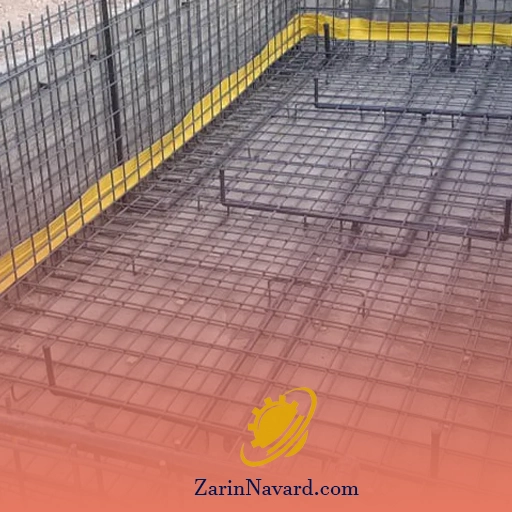
Wire that has not been properly baked tears when twisted around rebar. This, in addition to slowing down work speed, reduces the safety of structural connections.
Severe weight loss in poor-quality products
Some unreliable sellers offer coils with unrealistic weights or mixed with waste, which creates problems in the project's engineering calculations.
5 Golden tips for inquiring accurate prices and economical steel wire purchase
- Inquire about prices daily from reliable manufacturing sources so as not to be influenced by false market prices.
- Always factor in the net weight of the coils (excluding the weight of reels or thick packaging) in your calculations.
- In bulk purchasing, inquire about transportation costs separately and compare them with the ex-factory price.
- Test a small sample of black wire before bulk purchasing to ensure its softness and lack of breakage.
- To reduce costs and access a real guarantee, conduct your purchase directly from the factory without middlemen.
Conclusion; How can we always be informed of daily prices?
Key Takeaway: To receive competitive prices and consultation for choosing the most economical wire, stay in touch with our sales experts.
Given the various variables that affect steel wire prices, the best way to experience a successful purchase is direct communication with the factory sales department. Our experts are ready to guide you in choosing the right size and grade in addition to providing the daily price list, so you can receive the best efficiency at the lowest cost.
Frequently Asked Questions about steel wire production and pricing
Question: Why is the price of galvanized wire higher than black wire?
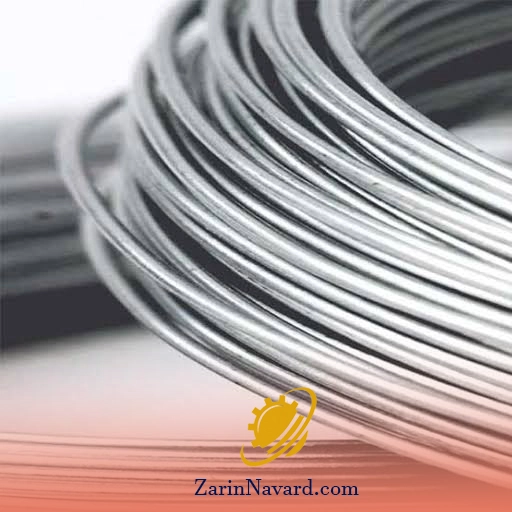
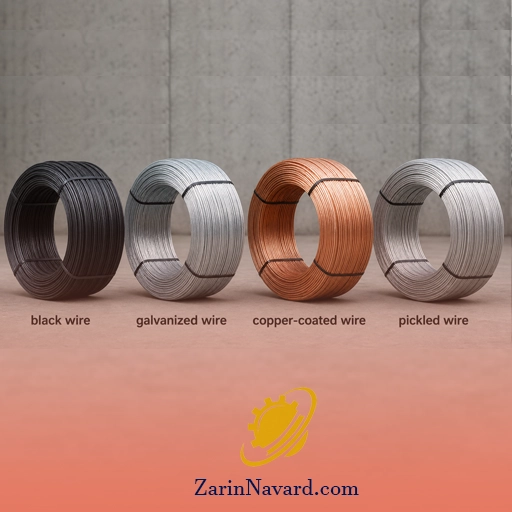
Answer: In addition to the drawing and baking process, galvanized wire goes through an additional step of passing through molten zinc, which adds the cost of raw materials (zinc metal) and the plating process to its price.
Question: What is the minimum order quantity for direct steel wire purchase?
Answer: Direct purchase from the factory is usually carried out in tonnage capacities, but for consumer industries, special conditions have been considered for workshop purchases, which you can check with our experts.
Question: How can one recognize the standard softness of rebar tie black wire?
Answer: High-quality rebar tie wire should easily bend with hand force and should not develop cracks or sudden breakage after being bent back and forth consecutively several times.
Question: Does the price of steel wire decrease in the winter season?
Answer: Usually, with the decrease in construction during the cold season, demand decreases, and prices might have some stability or a relative decrease, although global steel factors and currency remain more influential.
Question: What is the difference between copper-coated wire and other wires, and why is its price different?
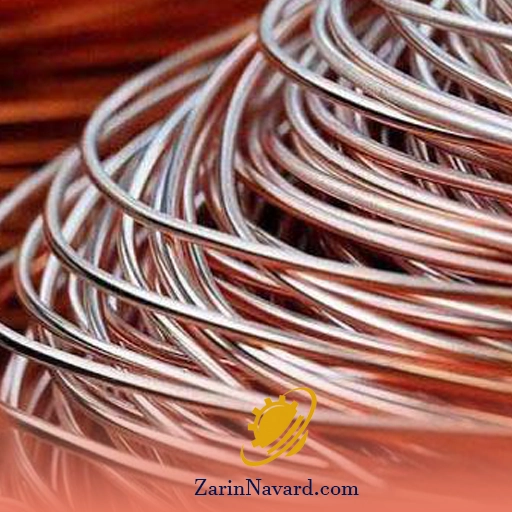
Answer: Copper-coated wire has a copper sulfate coating used for manufacturing lampshade skeletons, shelves, and metal baskets. The cost of plating materials and production precision increases its price compared to black wire.